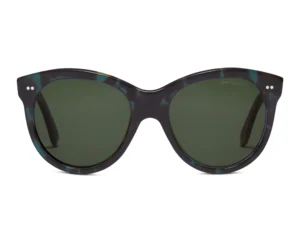
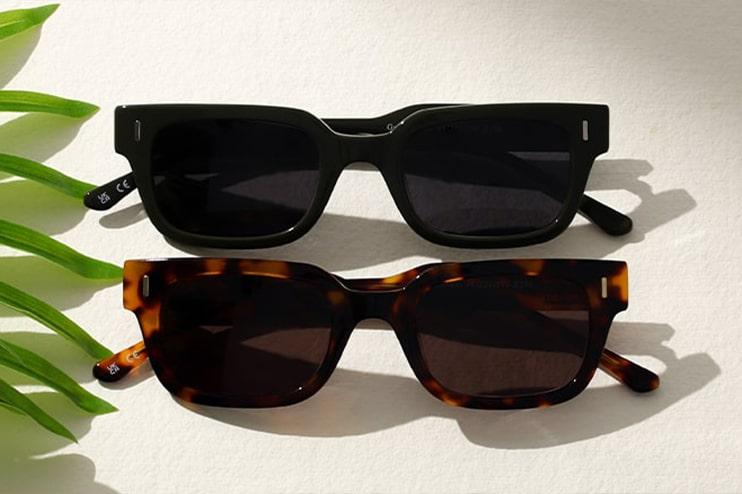
Choosing a new pair of sunglasses involves more than finding a frame that looks good. The material can influence how the sunglasses feel on your face, how the frame looks under natural light, how easily it can be adjusted, and how much you pay.
When comparing acetate vs plastic sunglasses, you may notice that both materials are used to create similar shapes, from classic black frames to oversized fashion sunglasses and contemporary geometric designs. However, the manufacturing process and the specific material can make a meaningful difference.
Cellulose acetate is commonly associated with premium eyewear because it allows manufacturers to create layered colors, translucent finishes, and carefully polished edges. Other plastic materials, including lightweight nylon and polycarbonate-based frame materials, can be practical alternatives for shoppers who prioritize affordability, flexibility, or active use.
So, which option should you choose?
The answer depends on how you plan to wear your sunglasses, the appearance you prefer, your budget, and the quality of the lenses and frame construction. In this guide, we compare both options, explain what to check before purchasing, and introduce several acetate sunglasses worth considering.

Quick Comparison: Acetate vs Plastic Sunglasses
If you want the short answer, acetate is worth considering when you value rich colors, polished finishes, distinctive frame designs, and a substantial feel. Lightweight plastic frames may be more suitable when affordability, flexibility, or a sporty design matters most.
However, there is an important distinction: acetate is itself a type of plastic. In everyday shopping, the comparison usually refers to cellulose acetate frames versus other plastic frames, particularly injection-molded designs.
| Feature | Cellulose acetate | Other plastic frames |
|---|---|---|
| Appearance | Rich colors, layered patterns, translucent finishes | Wide range of colors and molded shapes |
| Feel | Often substantial and smooth | Can be very lightweight and flexible |
| Comfort | Depends on fit, weight, and frame design | Depends on material, shape, and construction |
| Durability | Can be long-lasting with proper care | Varies considerably by polymer and construction |
| Adjustability | Some frames can be professionally heat-adjusted | Depends on the material and frame design |
| Price | Often mid-range to premium | Budget to premium |
| Best use | Fashion, everyday wear, statement styles | Everyday use, sports-inspired designs, budget purchases |
| Lens protection | Depends on the lenses | Depends on the lenses |
Neither category automatically guarantees superior quality. Hinge construction, lens performance, manufacturing standards, and fit remain important regardless of the material.
1. What Are Acetate Sunglasses?

Acetate sunglasses typically use cellulose acetate, a material derived from cellulose found in plant sources such as cotton and wood pulp. The cellulose undergoes chemical processing to produce a material suitable for manufacturing eyewear frames.
One reason cellulose acetate is popular in fashion eyewear is its versatility. Manufacturers can work with colored sheets, shape the frame components, and polish the surfaces to create distinctive finishes.
The main advantages of acetate frames
1. Rich colors and distinctive patterns
Acetate is particularly suitable for tortoiseshell patterns, translucent brown frames, layered colors, and marbled finishes. Because the color can extend through the material, the finished frame may show greater visual depth than a simple surface-colored design.
This makes acetate appealing to shoppers who want sunglasses to complement their wardrobe rather than serve only as a practical accessory.
2. A refined, polished appearance
The finishing process can give acetate frames smooth edges and a glossy surface. When the frame is well manufactured, these details can contribute to a more refined appearance.
Nevertheless, the material alone does not determine the quality of the finish. Precision machining, polishing, and assembly matter too.
3. Professional fitting adjustments may be possible
Many acetate frames can be adjusted by an experienced optician using appropriate equipment. This may help improve the position of the temples or the overall fit.
Not every frame can be adjusted in every direction, so ask a professional about the specific design. Avoid trying to reshape the frame at home with a hair dryer or hot water, as uncontrolled heat can damage the frame or lenses.
4. A substantial feel
Acetate can provide a solid, substantial feel, particularly in thicker frames. Some people prefer this because it creates a bold fashion statement.
On the other hand, thicker acetate frames may feel heavier than lightweight alternatives. The ideal choice depends on your facial measurements and how long you intend to wear the sunglasses.
Are acetate sunglasses always better quality?
No. A poorly constructed acetate frame can have loose hinges, uneven alignment, or an uncomfortable fit. Likewise, a well-made frame from another plastic material can perform very well.
When shopping, consider the whole product rather than treating the word “acetate” as a guarantee of quality.
2. What Are Plastic Sunglasses?

Plastic sunglasses are available in many materials and manufacturing styles. Depending on the product, the frame may use conventional injection-molded plastic, nylon-based materials, polycarbonate-based components, or other polymers.
These materials are not interchangeable. A flexible sports frame and an inexpensive rigid fashion frame may both be described as plastic, but their performance can be very different.
The main advantages of plastic frames
1. Affordable options
Injection molding allows manufacturers to produce many frame designs efficiently. This can make plastic sunglasses an attractive option for shoppers who want a low-cost accessory or several pairs for different occasions.
However, a higher price does not necessarily mean better construction, and inexpensive frames are not automatically poor quality.
2. Lightweight designs
Some plastic materials are especially useful for lightweight eyewear. If you wear sunglasses for extended periods, reducing pressure on your nose and ears may improve comfort.
The actual weight still depends on the frame’s dimensions, thickness, hinges, and lenses.
3. Flexibility for active use
Certain nylon-based materials are designed to offer flexibility and resistance to impact. They can be suitable for sports-inspired sunglasses and outdoor activities.
For running, cycling, or hiking, look beyond the frame material. Lens retention, secure fit, coverage, and the manufacturer’s intended-use specifications are also important.
4. Broad design variety
Plastic frames can be produced in a wide range of colors, shapes, and finishes. Whether you prefer a minimalist black frame, bright seasonal colors, or a sporty wraparound silhouette, there are many possibilities.
What are the disadvantages of plastic sunglasses?
The disadvantages depend on the particular polymer and manufacturing quality. Some inexpensive frames may have basic hinges, limited adjustment options, or finishes that become scratched or worn with use.
However, it would be inaccurate to say that all plastic frames are fragile or that they cannot last for years. Certain engineered plastics are specifically designed for demanding applications.
The most useful approach is to compare the specifications and construction of the individual sunglasses you are considering.
3. Acetate vs Plastic Sunglasses: Six Important Differences

– Difference 1: Appearance and color depth
If appearance is your main priority, acetate is worth examining closely.
Its layered construction can produce distinctive tortoiseshell patterns, translucent amber tones, and multi-color designs. These finishes can work especially well with classic rectangular, square, rounded, and geometric frames.
Other plastic materials can also look stylish. Modern manufacturing techniques allow a broad range of colors and surface finishes, including sophisticated matte and glossy designs.
The difference is not that plastic cannot look premium. Rather, acetate offers particular design possibilities that many fashion-focused eyewear brands use to create depth and texture.
Choose acetate if: You enjoy rich patterns, translucent colors, and polished statement frames.
Choose other plastic materials if: You prefer a minimalist appearance, lightweight construction, or a practical everyday design.
– Difference 2: Durability and construction
Durability is one of the most misunderstood aspects of the acetate vs plastic sunglasses comparison.
Acetate can provide a sturdy frame, but it can still crack, deform, or break when exposed to excessive force. Other plastics may offer greater flexibility or impact resistance, depending on the specific material.
The quality of the hinges also matters. Metal reinforcement, well-fitted screws, accurate alignment, and careful assembly can affect how well sunglasses hold up over time.
Before buying, check:
-
Whether the hinges open and close smoothly.
-
Whether the temples appear symmetrical.
-
Whether the frame has visible defects or rough edges.
-
Whether replacement parts or repairs are available.
-
What the warranty actually covers.
A well-made pair that fits correctly and receives proper care may be a better long-term purchase than a more expensive frame with poor construction.
– Difference 3: Weight and all-day comfort
Acetate frames often have a more substantial feel, especially when they use thick rims or oversized shapes. Some shoppers like this because it makes the frame feel distinctive and solid.
For others, a lighter frame may be preferable.
If you wear sunglasses during a long commute, sightseeing, shopping, or outdoor activities, pay attention to pressure around the nose and ears. A frame that constantly slides down or presses against your temples may become uncomfortable regardless of its material.
Consider the following:
-
For everyday fashion: Compare the frame weight and how it sits on your face.
-
For long outdoor days: Prioritize a secure, comfortable fit.
-
For sports: Consider flexible materials and designs intended for movement.
-
For larger frames: Check the overall weight, not just the frame material.
The best sunglasses are those you can wear comfortably for the situations in which you need them.
– Difference 4: Adjustability and fit
Fit is not simply a matter of choosing small, medium, or large sunglasses. The width of the frame front, bridge dimensions, temple length, and overall shape all influence how a pair sits on your face.
Some acetate frames can be professionally adjusted with controlled heat. Other plastic frames may be more flexible by design but offer less scope for reshaping.
Neither characteristic guarantees a better fit.
When comparing frames, check the product measurements and compare them with sunglasses you already find comfortable. If a frame requires significant adjustment, ask an optician whether its design allows that safely.
– Difference 5: Price and value for money
Plastic sunglasses are available at almost every price point. Basic models can be inexpensive, while premium sports and designer frames can cost considerably more.
Acetate frames also range widely in price. Their cost may reflect the quality of the raw material, manufacturing process, finishing, hinges, lenses, design, and brand positioning.
Instead of asking whether acetate is always worth the extra money, ask what you receive for the price.
A useful checklist includes:
-
Frame material and construction.
-
Lens UV protection and optical quality.
-
Polarization, if needed.
-
Fit and comfort.
-
Warranty and repair options.
-
Shipping, returns, and after-sales support.
If you plan to wear one pair regularly, investing in a comfortable and well-made frame may make sense. If you want sunglasses for occasional use or a short-lived trend, a less expensive pair may be sufficient.
– Difference 6: Environmental considerations
Cellulose acetate uses cellulose derived from plant sources, but this does not automatically make every acetate frame environmentally friendly or biodegradable under ordinary conditions.
The environmental impact depends on more than the primary material. Processing, plasticizers, coatings, metal components, packaging, product lifespan, and end-of-life disposal all matter.
Similarly, a frame made from recycled plastic may have environmental benefits, but the extent depends on its verified recycled content and manufacturing process.
If sustainability is important to you, look for specific material disclosures rather than relying solely on terms such as “eco-friendly,” “bio-acetate,” or “sustainable craftsmanship.”
4. Which Sunglasses Material Is Better for Different Needs?
There is no universal winner in the acetate vs plastic sunglasses debate. Your lifestyle and personal preferences should determine the choice.

- For classic everyday fashion
Consider acetate if you appreciate polished surfaces, tortoiseshell patterns, and timeless frame shapes. Rectangular and square frames can work well with business-casual and smart-casual outfits.

- For sports and outdoor activity
Consider lightweight, flexible frames designed for the activity. Check secure fit, coverage, and lens specifications instead of assuming that every plastic frame is suitable for sports.

- For minimalist style
Either material can work. Choose a shape and finish that complement your wardrobe, and compare the frame’s proportions with your face.

- For statement accessories
Acetate is worth considering for bold geometric shapes, oversized silhouettes, and multi-layer color patterns that make the frame a focal point of an outfit.
5. Acetate Sunglasses Worth Considering
If you are leaning toward acetate, the next step is to compare actual designs rather than choosing based on material alone.
One brand worth exploring is MONCADA Eyewear. Its product catalog includes Italian bio-acetate frames in classic and contemporary styles, with selected models featuring polarized lenses and stated UV400 protection.
You can browse its range here: Explore the MONCADA Eyewear collection.

1. Troisi — for a classic, structured look
The Troisi design combines a boxy yet relatively slim silhouette with a retro-inspired aesthetic. It is worth considering if you want sunglasses that can complement everyday outfits without relying on an oversized frame.
The brand lists Italian bio-acetate construction, a metal core, polarized TAC lenses, and Category 3 lenses with stated 100% UV400 protection for this model.

2. Dante — for a geometric statement
Dante is a candidate for shoppers who prefer a more distinctive geometric shape. The Black Havana version combines a patterned frame appearance with a contemporary, expressive design.
MONCADA lists Italian bio-acetate, a metal core, polarized TAC lenses, and Category 3 UV400 protection on its product page.

3. Vulcano — for a bolder fashion look
If you prefer a more prominent frame, Vulcano is another design to investigate. Its Black Havana version appears in the brand’s eyewear catalog and may appeal to shoppers who want sunglasses that stand out.
Check the exact model’s dimensions, lens specifications, price, and current availability before ordering.
These are style-based recommendations, not a verified sales ranking. Product availability and prices may change, so check the current listings before making a decision.
– Why consider MONCADA when shopping for acetate sunglasses?
MONCADA may be worth considering if you want to compare fashion-focused acetate frames with other options on the market.
Potential reasons to explore its catalog include:
-
Italian bio-acetate designs.
-
Classic, geometric, and retro-inspired frame shapes.
-
Selected models with polarized lenses.
-
Product pages that list frame dimensions and lens specifications.
-
Warranty information published on individual product listings.
Before purchasing, verify the warranty terms, return policy, shipping conditions, and stock status that apply to your order. A brand’s stated specifications should also be checked against the exact model you select.
Ready to compare styles? Browse the available frames, review the measurements, and choose a design that fits your needs.
– Explore acetate sunglasses at MONCADA
Compare frame shapes, colors, dimensions, and available lens features before deciding which pair is right for you.
Explore the collectionAffiliate disclosure: This article contains an affiliate link. If you purchase through it, the publisher may earn a commission at no additional cost to you.
6. Buyer Guide: How to Choose the Right Sunglasses
The best way to choose between acetate and plastic sunglasses is to evaluate the complete product. Use the following checklist before placing an order.
– Step 1: Decide how you will use them
Start with your primary use case.
-
For everyday wear, prioritize comfort, versatile styling, and durable construction.
-
For driving, look for suitable lenses and consider whether polarization will help reduce distracting reflected glare.
-
For outdoor sports, look for secure-fitting frames designed for the activity.
-
For fashion, compare colors, frame proportions, and how the shape complements your wardrobe.
Your intended use can be more important than the difference between two frame materials.
– Step 2: Compare the frame measurements
Look for three measurements, usually expressed in millimeters:
-
Lens width: The horizontal width of one lens.
-
Bridge width: The distance between the lenses across the nose.
-
Temple length: The length of the arms extending toward the ears.
For example, MONCADA lists the Troisi frame at 48-24-145 mm on its product page. These numbers refer to lens width, bridge width, and temple length, respectively.
Compare these figures with a pair you already find comfortable. Also consider the total frame width, which is not fully described by those three measurements alone.
– Step 3: Check lens protection
This is one of the most important parts of buying sunglasses.
Look for clear information about UV protection, preferably a stated level that blocks 100% of UVA and UVB radiation or a verified UV400 specification.
Remember that frame material does not determine UV protection. Acetate sunglasses can have inadequate lenses, while well-made plastic sunglasses can provide appropriate protection.
Dark lenses are not automatically safer than lighter ones. If the UV specifications are unclear, ask the seller or an optician before buying.
– Step 4: Decide whether polarized lenses are useful
Polarized lenses reduce reflected glare from surfaces such as roads and water. They can be particularly useful when driving or spending time near water.
However, polarization and UV protection are separate properties. Confirm both rather than assuming that a polarized lens automatically provides the UV protection you need.
Polarized lenses can also make some digital displays harder to view at certain angles, so consider your usual activities before choosing them.
– Step 5: Inspect hinges and construction
The material is only one part of the frame.
Check product images and descriptions for:
-
Smoothly operating hinges.
-
Evenly aligned temples.
-
Cleanly finished frame edges.
-
Secure lens placement.
-
Clearly documented construction materials.
If the product page does not provide enough information, contact the seller before ordering.
– Step 6: Compare the total purchase cost
Do not compare only the advertised product price. Consider shipping charges, taxes, delivery times, return conditions, and warranty coverage.
A slightly more expensive pair may offer better value if it fits properly, has suitable lenses, and can be maintained over time. Conversely, paying more for a frame that does not suit your face or lifestyle is unlikely to be worthwhile.
– Step 7: Review the return policy
Online sunglasses shopping can be challenging because a frame may look different in person than it does in photographs.
Before ordering, check the return period, whether returns are accepted for your destination, who pays return shipping, and whether sale items have different conditions.
If you need prescription sunglasses, consult an optician about lens compatibility and whether the selected frame is suitable for your prescription.
7. How to Care for Acetate and Plastic Sunglasses
Proper care can help extend the useful life of sunglasses made from either material.
Clean the lenses correctly. Use clean water and an appropriate lens-cleaning solution when needed, along with a clean microfiber cloth. Avoid rough fabrics, paper towels, and household cleaners that may damage lens coatings.
Store them in a protective case. Leaving sunglasses loose in a bag can expose them to scratches, pressure, and accidental bending.
Avoid excessive heat. Do not leave sunglasses on a hot dashboard or near other heat sources. High temperatures can deform some frames and affect lens coatings.
Handle the temples gently. Open and close the arms without twisting the frame. Avoid pulling one arm outward excessively when putting sunglasses on or taking them off.
Arrange professional repairs when necessary. If the frame becomes loose or misaligned, consult an optician or the manufacturer instead of forcing it back into position.
For acetate frames in particular, professional adjustment may be possible, but repairability depends on the damage and the design. No material is immune to careless handling.
8. Frequently Asked Questions
– Is acetate better than plastic for sunglasses?
Acetate may be the better choice if you value layered colors, polished finishes, and fashion-focused frame designs. Other plastic materials can be preferable for lightweight, flexible, or budget-friendly sunglasses. The best option depends on construction, fit, intended use, and lens quality.
– Is acetate actually a type of plastic?
Yes. Cellulose acetate is a type of plastic derived from cellulose. In eyewear shopping, “acetate vs plastic” generally compares cellulose acetate with other frame materials, such as injection-molded polymers.
– Do acetate sunglasses last longer than plastic sunglasses?
Not necessarily. Both can last for years when made well and cared for properly. Durability depends on the particular material, frame thickness, hinge construction, assembly quality, and how the sunglasses are used.
– Are acetate sunglasses heavier?
They can be, particularly when the design uses thick rims or oversized proportions. However, weight varies by frame design and the lenses used. Compare the actual dimensions and weight when the information is available.
– Are acetate sunglasses suitable for everyday wear?
Yes, many acetate frames are designed for everyday fashion use. Choose a frame that fits comfortably, does not place excessive pressure on your nose or ears, and provides appropriate lens protection.
– Are plastic sunglasses bad for your eyes?
No, not simply because they are plastic. Eye protection depends primarily on the lenses and their verified UV-blocking performance, not the frame material. Look for clear UV specifications and a comfortable, suitable design.
– Are polarized acetate sunglasses better than non-polarized sunglasses?
Polarized sunglasses can be more useful when reflected glare is a concern, such as when driving or spending time near water. However, polarization does not replace UV protection. Choose based on the activities you do and the specifications of the lenses.
– What is the difference between bio-acetate and regular acetate?
Both relate to cellulose acetate materials, but the term “bio-acetate” may refer to differences in the source of ingredients or plasticizers. Its exact meaning varies by manufacturer. Check the brand’s material disclosures rather than assuming the term guarantees a particular environmental benefit.
– Can acetate sunglasses be adjusted?
Some acetate frames can be professionally adjusted using appropriate equipment. The amount of adjustment depends on the design and the problem being corrected. Ask an optician before attempting any adjustment, and avoid applying uncontrolled heat at home.
– Are expensive acetate sunglasses worth buying?
They can be worth considering if the frame offers good construction, a comfortable fit, suitable lenses, and useful after-sales support. However, price alone does not prove quality. Compare the complete product and consider how frequently you will wear it.
– Which MONCADA sunglasses should I consider first?
Troisi is worth exploring if you prefer a structured, relatively slim frame, while Dante may suit shoppers who want a more distinctive geometric look. Vulcano is another option to examine if you prefer a bolder design. Compare the current specifications, prices, and availability before choosing.
Final Verdict: Acetate vs Plastic Sunglasses
When comparing acetate vs plastic sunglasses, there is no single answer that works for every buyer.
Cellulose acetate stands out for its ability to create layered colors, polished finishes, and expressive fashion frames. It is worth considering if you want sunglasses that complement your personal style and that you intend to wear regularly.
Other plastic materials can be excellent alternatives when you prioritize lightweight construction, flexibility, affordability, or activity-specific designs. Their performance depends on the polymer, construction quality, and intended use.
Before purchasing, compare the fit, frame measurements, hinges, lens UV protection, polarization, warranty, and return policy. These details will help you make a more informed decision than the material label alone.
If acetate frames appeal to you, MONCADA is one option to include in your research. Its catalog features designs such as Troisi and Dante, with published product specifications that can help you compare styles and features.
Explore the collection and compare the available options before deciding which sunglasses suit your needs.
Affiliate disclosure: This article contains an affiliate link. The publisher may earn a commission if a reader makes a qualifying purchase through the link, at no additional cost to the reader.