
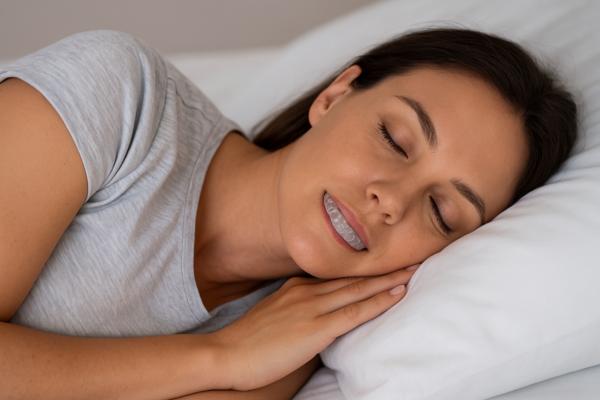
Teeth grinding, also known as sleep bruxism, is a common condition in which a person unconsciously clenches or grinds their teeth while sleeping. Some people experience it occasionally, while others may develop a repeated pattern that places considerable pressure on their teeth and jaw muscles.
One of the biggest challenges is that many people do not realize they grind their teeth. They may only discover the problem after a sleeping partner notices unusual sounds or a dentist identifies signs of tooth wear during a routine examination.
So, how to stop grinding teeth at night, and what can you do to protect your teeth if you cannot fully control the habit while sleeping?
The answer usually involves more than one approach. Understanding potential triggers, improving sleep habits, managing stress, addressing related sleep conditions, and considering an appropriate dental night guard can all play a role.
This guide explains why nighttime grinding happens, how to recognize potential damage, how to relieve jaw discomfort, and what to consider when choosing a teeth-grinding protection solution.
1. Why Do I Grind My Teeth in My Sleep?
If you have ever asked yourself, “Why do I grind my teeth in my sleep?”, you are not alone.
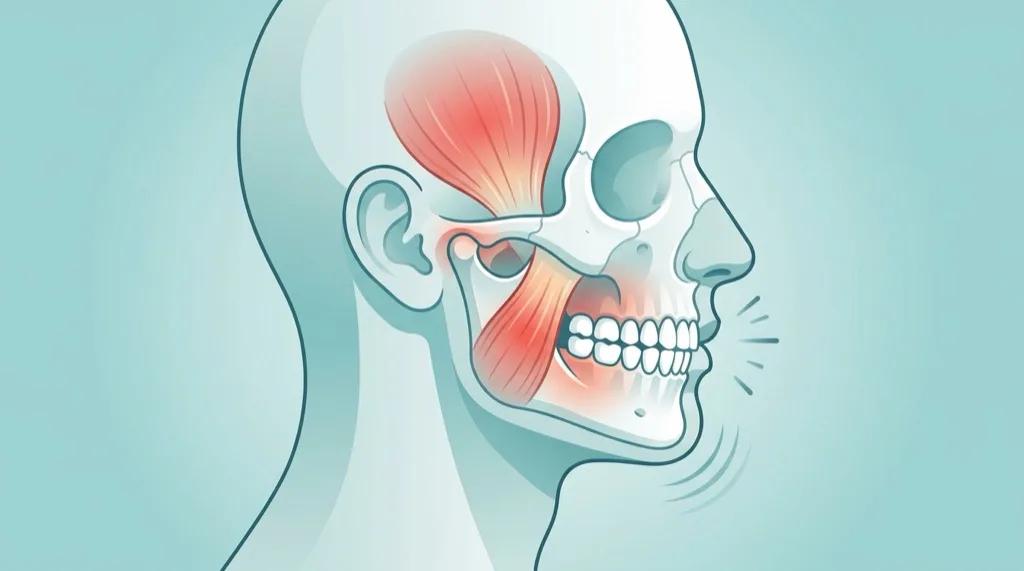
Sleep bruxism happens when the jaw muscles become active during sleep, causing the upper and lower teeth to press together or move against each other. Unlike normal chewing, this activity is involuntary and may happen without you being aware of it.
There is no single explanation for every case. Several factors may contribute to nighttime teeth grinding.
Stress and anxiety
Stress is one of the commonly recognized factors associated with bruxism.
When people experience ongoing emotional pressure, anxiety, or tension, their bodies may respond through different physical behaviors. Jaw clenching is one possible response.
For example, someone dealing with work pressure, financial concerns, or an irregular daily routine may notice increased jaw tension during the day and potentially experience grinding during sleep.
Relaxation techniques, mindfulness, counseling, and regular physical activity may help manage stress-related triggers.
Sleep disorders
Sleep bruxism may be associated with certain sleep-related conditions, including obstructive sleep apnea and other sleep disturbances.
People who snore heavily, wake up frequently, or feel excessively tired during the day should consider discussing their symptoms with a healthcare professional.
Treating an underlying sleep disorder may be an important part of managing nighttime grinding.
Caffeine, alcohol, and smoking
Lifestyle habits may also influence sleep quality and bruxism risk.
Consuming substantial amounts of caffeine, especially later in the day, may interfere with sleep. Alcohol and tobacco use have also been associated with an increased likelihood of teeth grinding.
Reducing evening caffeine, avoiding excessive alcohol, and stopping smoking may be useful steps.
Certain medications
Some medications, including certain antidepressants and other prescription drugs, may contribute to bruxism in some individuals.
If you notice that teeth grinding started or became worse after beginning a medication, speak with your prescribing healthcare professional.
Do not stop or change prescribed medication without medical advice.
Family history and individual factors
Genetic factors may also play a role. Some people have a family history of teeth grinding, suggesting that susceptibility can vary between individuals.
Dental alignment, jaw-related conditions, and individual sleep patterns may also be relevant.
The important point is that nighttime grinding is not necessarily caused by stress alone. A dental or medical assessment can help identify possible contributing factors.
2. Teeth Grinding Damage Symptoms: What Should You Look For?
Occasional teeth grinding may not cause noticeable problems. However, repeated or intense grinding can place excessive pressure on teeth, dental restorations, and jaw muscles.
Recognizing potential teeth grinding damage symptoms early can help you seek appropriate dental care before the problem becomes more serious.
Here are some common warning signs.
Flattened or worn-down teeth
One of the most recognizable signs of long-term grinding is unusual wear on the chewing surfaces of the teeth.
The enamel may gradually become flatter, and the natural shape of the biting surfaces may change.
This type of wear can be difficult to notice without a dental examination, particularly during the early stages.
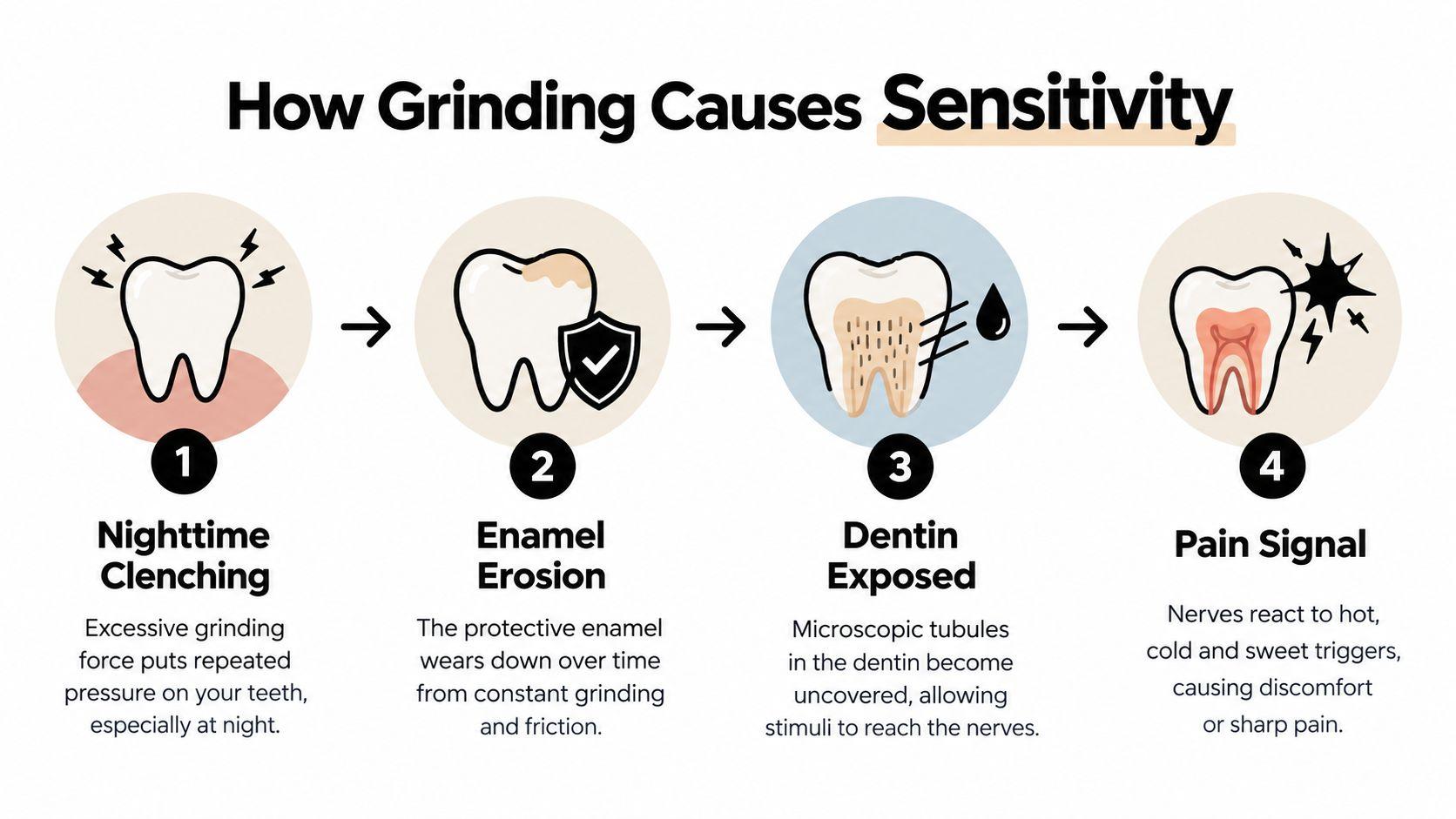
Increased tooth sensitivity
When enamel becomes worn or damaged, the underlying tooth structures may become more exposed.
You may notice sensitivity when consuming:
-
Cold drinks.
-
Hot beverages.
-
Sweet foods.
-
Acidic foods.
-
Certain types of hard or crunchy food.
Tooth sensitivity can have several causes, so it should not automatically be attributed to bruxism.
Cracked, chipped, or damaged teeth
Repeated grinding places mechanical pressure on teeth.
In more severe cases, this pressure may contribute to small cracks, chipped edges, or damage to existing fillings and crowns.
If you notice a new crack, broken filling, or persistent tooth pain, arrange a dental examination.
Morning headaches
Some people with nighttime grinding wake up with headaches, particularly around the temples.
This may be related to repeated muscle activity during sleep.
However, morning headaches can also be associated with sleep disorders, dehydration, migraines, and other medical conditions.
Jaw soreness and facial discomfort
Another common symptom is tenderness around the jaw muscles.
You may notice:
-
A tired feeling in your jaw after waking.
-
Pain when chewing.
-
Tightness around the cheeks.
-
Discomfort near the ears.
-
Difficulty opening your mouth comfortably.
If these symptoms happen frequently, a dentist can evaluate whether bruxism or a temporomandibular disorder may be involved.
Disturbed sleep
Some people grind their teeth loudly enough for a sleeping partner to notice.
Repeated grinding and associated sleep disturbances may affect how refreshed you feel the following morning.
When should you see a dentist?
Seek professional advice if you have persistent jaw pain, sensitive teeth, visible tooth damage, recurring headaches, or reports from someone who hears you grinding during sleep.
Early assessment can help prevent further damage and identify other possible explanations for your symptoms.
3. How to Stop Grinding Teeth at Night: 7 Practical Strategies

If you are searching for how to stop grinding teeth at night, it is important to understand that there is no universal solution that works for everyone.
Some people experience improvement after changing lifestyle habits, while others may need dental treatment or further evaluation for sleep-related problems.
The following strategies can help you develop a more complete approach.
1. Reduce stress before bedtime
Stress management is a useful starting point, particularly if you notice that jaw tension increases during stressful periods.
Try introducing a relaxing routine approximately 30–60 minutes before going to bed.
Possible activities include:
-
Reading a book.
-
Listening to calming music.
-
Practicing slow breathing.
-
Taking a warm shower.
-
Doing gentle stretching.
-
Practicing meditation.
You do not need an elaborate routine. Consistency is often more practical than attempting several new activities at once.
If anxiety is persistent or significantly affects your sleep, consider speaking with a qualified mental health professional.
2. Reduce caffeine and alcohol in the evening
Caffeine can interfere with sleep, particularly when consumed later in the day.
Consider limiting coffee, energy drinks, and other caffeinated beverages in the afternoon and evening.
Alcohol may also affect sleep quality and is associated with bruxism.
Reducing alcohol consumption, particularly before bedtime, may be beneficial for some people.
3. Establish a consistent sleep schedule
Irregular sleep patterns can make it harder to maintain healthy sleep habits.
Try to:
-
Go to bed at approximately the same time every night.
-
Wake up at a consistent time.
-
Keep your bedroom dark and comfortable.
-
Reduce screen exposure before sleeping.
-
Avoid heavy meals immediately before bedtime.
Improving sleep habits does not guarantee that grinding will stop, but it can support overall sleep health.
4. Practice relaxing your jaw during the day
Although your primary concern may be nighttime grinding, daytime clenching can also contribute to jaw muscle tension.
A useful awareness technique is to keep your lips gently together while allowing your teeth to remain slightly apart.
Your jaw should feel relaxed rather than tightly pressed together.
Set occasional reminders during the day to check whether you are clenching your teeth.
Over time, this may help you become more aware of unconscious jaw tension.
5. Avoid chewing gum and very hard foods when your jaw hurts
If your jaw muscles are already uncomfortable, repeatedly chewing gum or eating very hard foods may increase the workload on those muscles.
Consider choosing softer foods temporarily when symptoms are present.
Avoid deliberately exercising your jaw through excessive chewing, particularly if it causes pain.
6. Evaluate possible sleep disorders
If you snore heavily, wake up gasping, experience breathing interruptions during sleep, or feel excessively sleepy during the day, discuss these symptoms with a healthcare professional.
Sleep apnea and other sleep disorders may coexist with sleep bruxism.
In some cases, further assessment or a sleep study may be appropriate.
7. Consider a properly fitted night guard
For people who grind their teeth regularly, a night guard may be an important way to reduce contact between the upper and lower teeth.
A night guard creates a protective barrier that can help limit tooth wear and damage.
However, it is important to understand that a night guard generally protects the teeth rather than guaranteeing that the underlying grinding behavior will stop.
A dentist can assess whether a custom-made dental appliance is appropriate and recommend the most suitable design.
4. How to Protect Teeth from Grinding While Sleeping
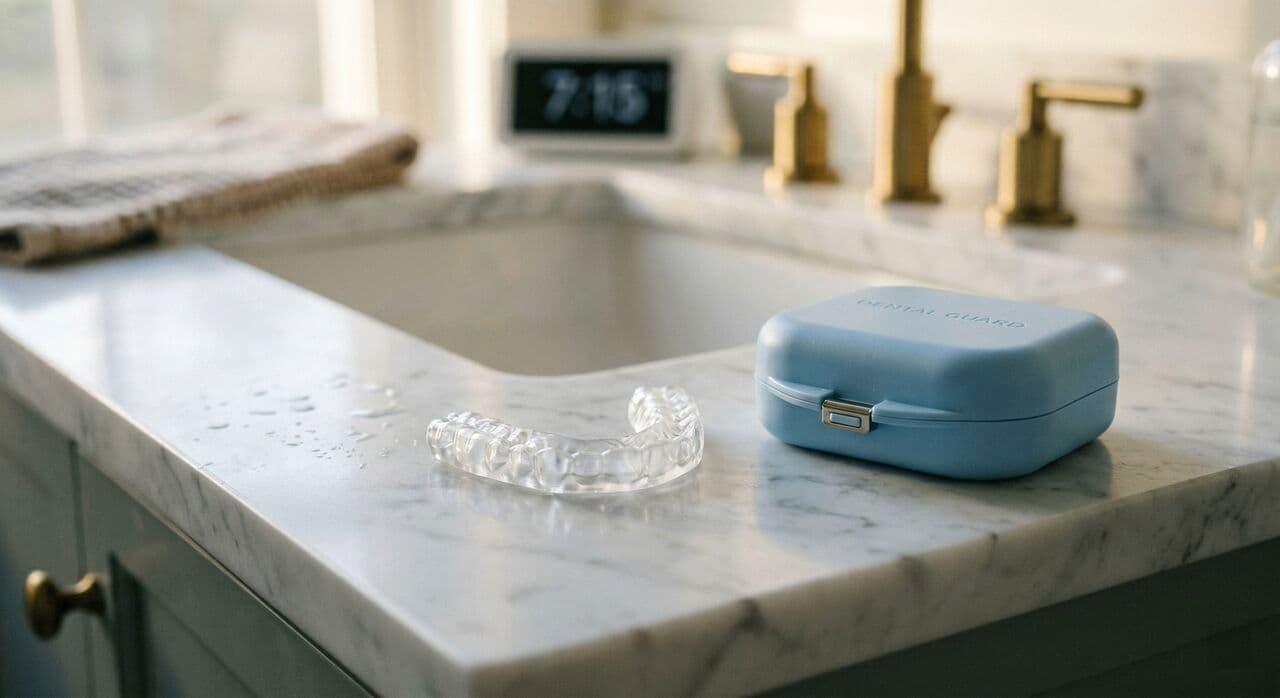
One of the most important goals when managing bruxism is preventing avoidable dental damage.
Even if you cannot completely control the muscles responsible for nighttime grinding, you may be able to reduce the amount of direct contact between your teeth.
There are several approaches worth considering.
Option 1: Store-bought night guards
Store-bought night guards are widely available and are often less expensive than custom-made dental appliances.
Some models are designed to be softened in hot water and molded around the teeth.
Advantages may include:
-
Lower initial purchase cost.
-
Easy availability.
-
No dental impression kit required for some models.
-
A convenient starting point for discussing protection options.
However, generic products may not fit every mouth comfortably.
A poor fit can make an appliance difficult to wear, and some designs may be unsuitable for particular dental conditions.
People with significant tooth damage, dental restorations, orthodontic appliances, or jaw pain should consult a dentist before choosing an over-the-counter product.
Option 2: Boil-and-bite mouth guards
Boil-and-bite products are designed to soften in hot water so that users can shape them around their teeth.
They provide a more personalized fit than a completely generic appliance, but the final result depends on the product design and molding process.
Potential disadvantages include:
-
Inconsistent fit.
-
Greater bulk in some designs.
-
Difficulty achieving an even fit.
-
Limited suitability for certain dental conditions.
They may be convenient for some users, but they are not automatically equivalent to professionally designed custom appliances.
Option 3: Dentist-made custom night guards
A dentist-made custom night guard is created using impressions or digital scans of your teeth.
Because it is designed around your dental anatomy, it may offer a more precise fit than a generic product.
A dentist can also evaluate your bite, existing restorations, jaw symptoms, and the severity of tooth wear before recommending a particular appliance.
This option may be worth considering if you grind frequently, have noticeable tooth wear, or struggle to tolerate generic guards.
Option 4: Online custom night guards
Online custom night guards offer another approach.
Typically, the customer orders an impression kit, takes an impression of their teeth at home, and sends the completed mold to a dental laboratory.
The finished appliance is then manufactured using the submitted impression.
This approach may offer more customization than a generic store-bought product while avoiding some of the inconvenience of arranging multiple in-person appointments.
However, the quality of the impression process, laboratory standards, customer support, fit-adjustment policies, and suitability for your dental condition should all be considered.
The key is to choose an appliance that is appropriate for your mouth rather than simply selecting the cheapest or thickest available option.
5. How to Stop Jaw Clenching While Sleeping
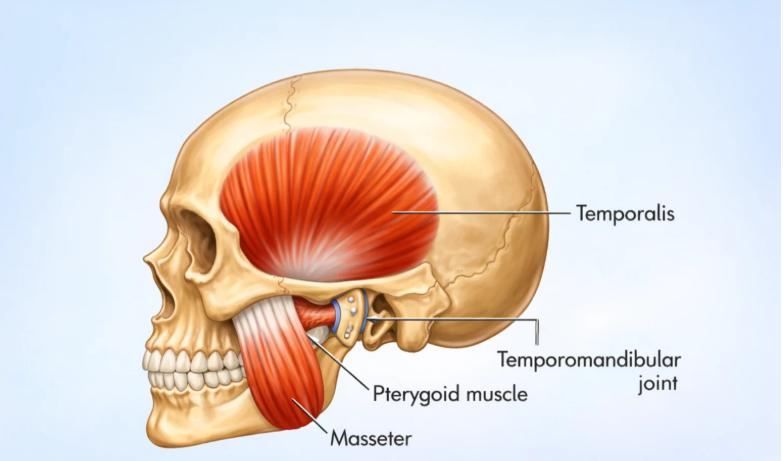
Jaw clenching and teeth grinding are closely related, but they are not exactly the same.
Grinding involves rubbing or sliding the teeth against each other, while clenching involves holding the teeth tightly together.
Both behaviors can place pressure on the jaw muscles.
If you are wondering how to stop jaw clenching while sleeping, consider the following steps.
Identify potential triggers
Start by looking for patterns.
For example:
-
Does jaw discomfort become worse during stressful weeks?
-
Do you consume several caffeinated drinks each day?
-
Do you regularly wake up during the night?
-
Has your sleep schedule recently changed?
-
Did symptoms begin after starting a new medication?
Keeping a simple sleep and symptom diary may help you identify possible associations.
Relax your jaw before bed
Spend a few minutes relaxing the muscles around your face and jaw.
You can try:
-
Sit comfortably with your shoulders relaxed.
-
Let your lower jaw rest naturally.
-
Keep your upper and lower teeth slightly apart.
-
Breathe slowly through your nose if comfortable.
-
Avoid forcing your jaw into a stretched position.
If a movement causes pain, stop rather than pushing through it.
Use a night guard when appropriate
A properly fitted night guard may help reduce direct tooth-to-tooth contact.
It is especially relevant when the main concern is protecting teeth from repeated grinding or clenching.
However, a guard does not necessarily eliminate the muscle activity responsible for clenching.
For persistent symptoms, a dentist may recommend additional approaches, such as behavioral therapy, physical therapy, or assessment of an underlying sleep disorder.
Do not ignore persistent jaw locking or severe pain
If you experience difficulty opening your mouth, jaw locking, significant swelling, or severe persistent pain, seek professional evaluation rather than relying solely on an oral appliance.
6. How to Relieve Jaw Pain from Clenching

Morning jaw discomfort can make eating, speaking, and concentrating more difficult.
If you are looking for how to relieve jaw pain from clenching, the first step is to avoid placing additional pressure on already irritated muscles.
Here are several measures that may help with mild discomfort.
Apply a warm compress
A comfortably warm compress may help relax tight jaw muscles.
Place a warm towel against the affected area for approximately 10–15 minutes.
Avoid excessive heat, and stop if the compress makes the discomfort worse.
Try a cold compress when appropriate
If the jaw feels swollen or irritated, a cold pack wrapped in a towel may help reduce discomfort.
The NHS recommends applying a wrapped ice pack for 20–30 minutes for jaw pain or swelling associated with teeth grinding.
Never apply ice directly to your skin.
Choose softer foods temporarily
When your jaw is sore, reduce activities that require excessive chewing.
Consider foods such as:
-
Yogurt.
-
Soft-cooked vegetables.
-
Eggs.
-
Oatmeal.
-
Mashed potatoes.
-
Soft fish.
Avoid hard candy, tough meat, chewing gum, and other foods that require prolonged chewing.
Practice gentle jaw relaxation
Try to keep your jaw in a relaxed resting position.
Avoid repeatedly opening your mouth as wide as possible or performing aggressive stretching exercises.
If you experience ongoing jaw discomfort, a dentist or physical therapist with relevant training can recommend appropriate exercises.
Consider appropriate pain relief
Some people may benefit from over-the-counter pain relief, such as paracetamol or ibuprofen, when suitable for their medical circumstances.
However, these medicines are not appropriate for everyone.
Follow the product instructions and consult a pharmacist or healthcare professional if you have existing medical conditions, take other medications, or are unsure which option is safe.
Address the underlying cause
Pain relief alone does not necessarily prevent future clenching.
If symptoms keep returning, a dental examination can help determine whether bruxism, temporomandibular disorder, tooth damage, or another condition may be responsible.
Seek urgent medical attention if jaw pain is accompanied by chest discomfort, shortness of breath, or other concerning symptoms.
7. How to Sleep Without Grinding Teeth: Building a Healthier Nighttime Routine

Many people searching for how to sleep without grinding teeth want a simple routine that reduces nighttime grinding and helps them wake up feeling better.
While no bedtime routine can guarantee that bruxism will disappear, consistent habits may support healthier sleep.
Here is an example of a practical evening routine.
| Time | Activity | Purpose |
|---|---|---|
| 6:00 PM | Avoid additional caffeine | Support sleep quality |
| 7:00 PM | Light physical activity | Reduce daily tension |
| 8:00 PM | Finish demanding work | Create a transition to rest |
| 8:30 PM | Take a warm shower | Relax before bed |
| 9:00 PM | Read or listen to calming music | Reduce stimulation |
| 9:30 PM | Practice gentle relaxation | Release jaw and facial tension |
| 10:00 PM | Go to bed consistently | Maintain a regular sleep schedule |
The schedule can be adjusted to your lifestyle.
Make your bedroom comfortable
Your sleeping environment can influence sleep quality.
Try to maintain:
-
A comfortable room temperature.
-
Minimal noise.
-
Reduced artificial light.
-
A consistent bedtime.
-
A comfortable pillow and mattress.
Avoid late-night stimulants
Reduce caffeine and avoid excessive alcohol consumption in the evening.
If you smoke, consider seeking support to stop.
Monitor your symptoms
Keep track of morning jaw discomfort, headaches, tooth sensitivity, and reports of grinding from your sleeping partner.
This information may be useful during a dental appointment.
Combine sleep habits with dental protection
If you have been diagnosed with sleep bruxism or show signs of tooth damage, improving sleep habits alone may not be sufficient.
A dentist can help determine whether a night guard or another treatment is appropriate.
The goal should be a combination of better sleep, reduced contributing factors, and appropriate protection for your teeth.
8. Choosing the Right Night Guard: What Are the Main Differences?
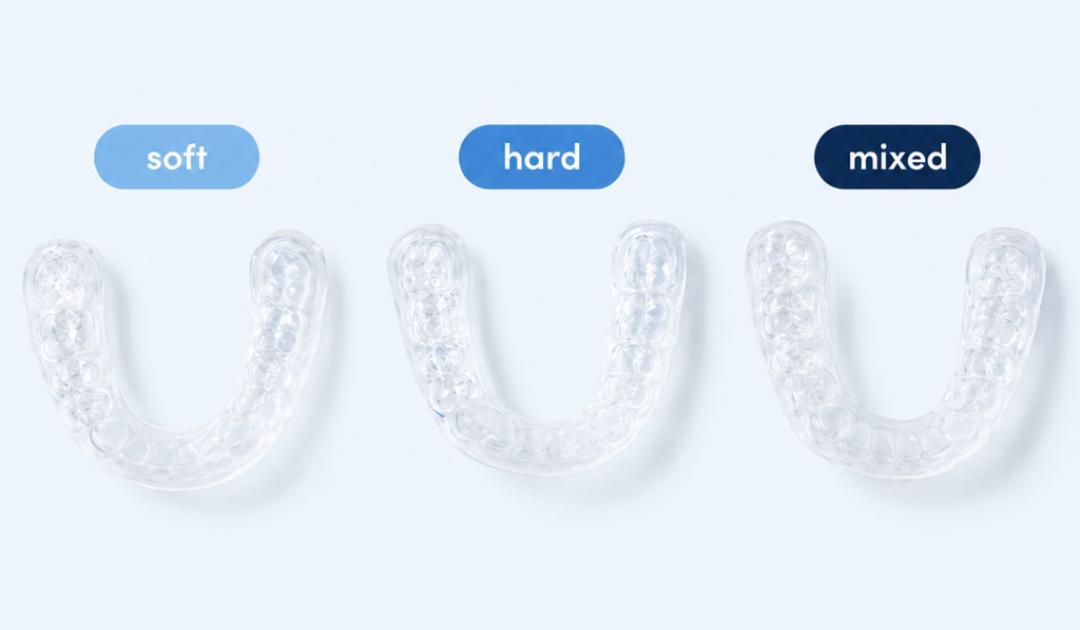
Not all night guards are designed in the same way.
Some are soft and flexible, while others use rigid acrylic materials. There are also dual-layer designs that combine different material characteristics.
Understanding these differences can help you make a more informed buying decision.
Soft night guards
Soft night guards are designed with flexible materials.
Potential advantages include:
-
A softer feel against the teeth.
-
Flexibility during insertion and removal.
-
Different thickness options.
-
An option for people who prefer a less rigid appliance.
However, a soft guard is not automatically the best option for everyone. Some individuals may find certain soft designs uncomfortable or unsuitable for their grinding patterns.
Hard acrylic night guards
Hard acrylic guards are rigid appliances designed to maintain their shape.
Potential advantages include:
-
A firm protective surface.
-
A more rigid structure.
-
The ability to be designed around a specific bite.
The dentist should determine whether a rigid appliance is appropriate, especially for people with jaw pain or complicated dental conditions.
Dual-layer night guards
Dual-layer designs combine different material characteristics.
Depending on the construction, one layer may provide a firmer structure while another offers a different contact surface.
These products may appeal to people who want to explore an alternative to fully soft or fully rigid designs.
However, material combinations alone do not guarantee better comfort or protection. Fit and professional suitability remain important.
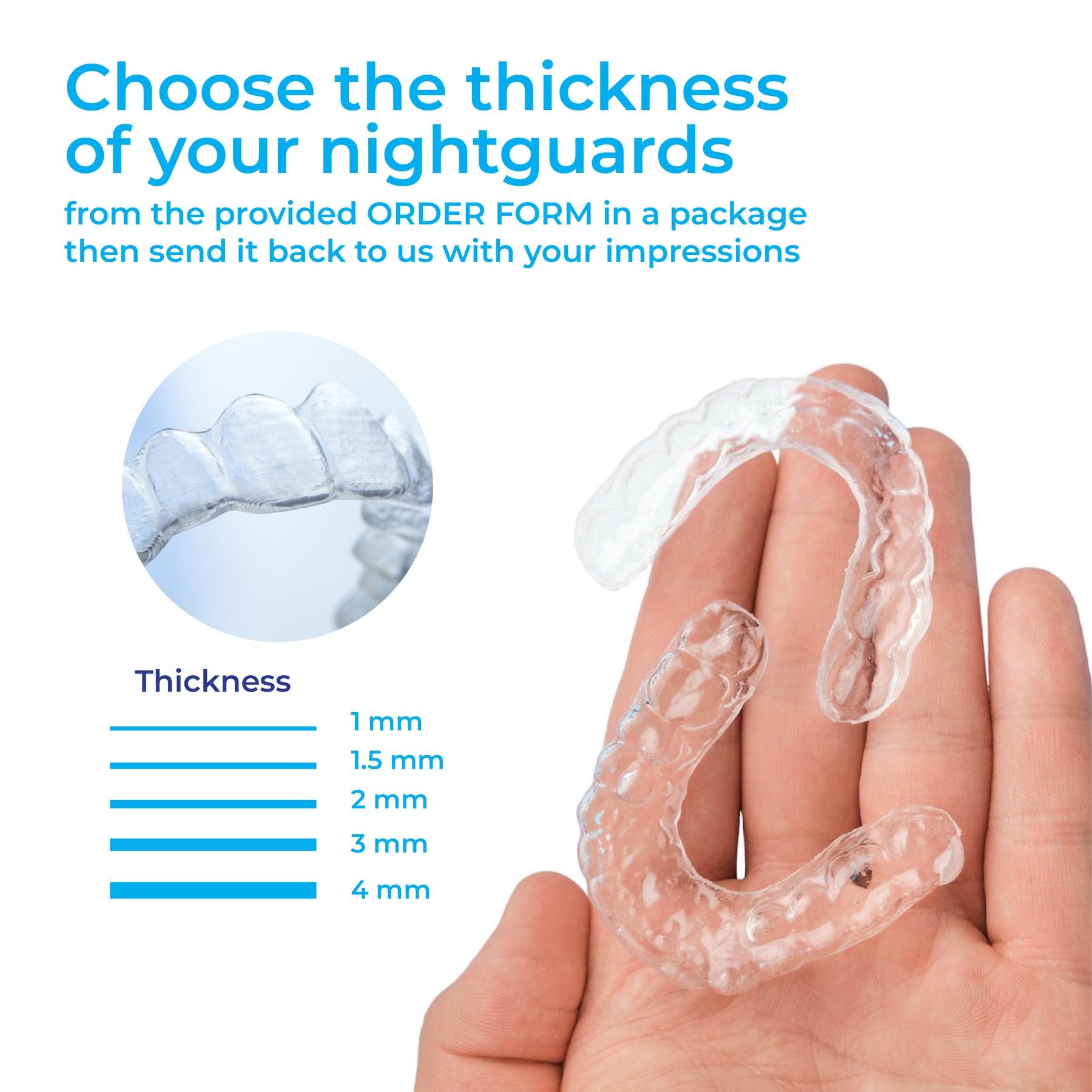
Does night guard thickness matter?
Thickness is another consideration.
You may find products advertised in different thicknesses, such as 1MM, 2MM, 3MM, and 4MM.
A thicker guard is not automatically better.
The appropriate thickness depends on several factors, including:
-
Your dental anatomy.
-
Your bite.
-
The appliance material.
-
Your comfort preferences.
-
Your grinding pattern.
-
Your dentist’s recommendations.
Rather than choosing a guard based only on thickness, consider the overall design and how it is intended to fit your teeth.
9. Exploring Custom Night Guard Options from Teeth Night Guard
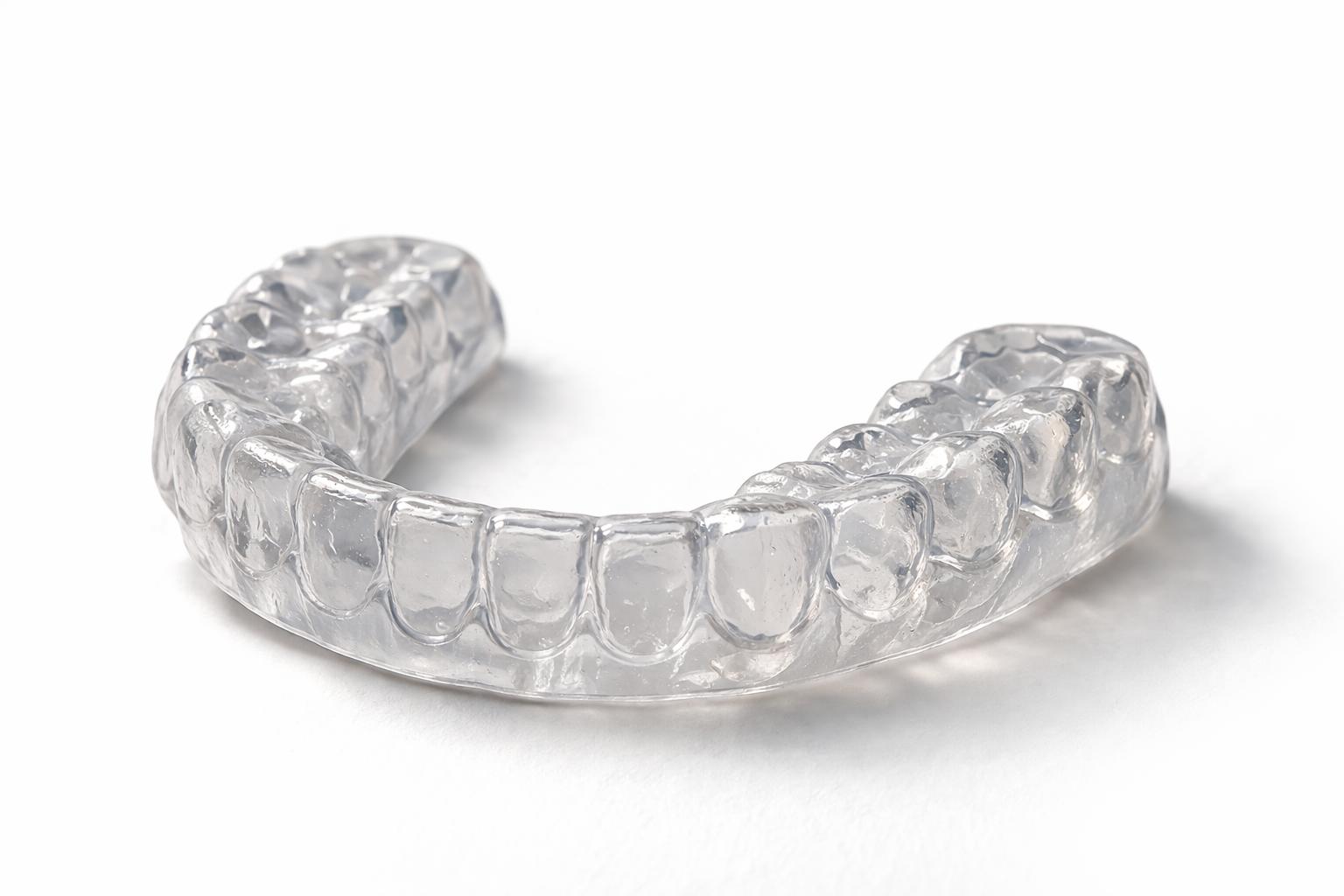
After understanding the causes of nighttime grinding and the different ways to protect your teeth, you may want to compare custom night guard providers.
One option worth exploring is Teeth Night Guard.
The company offers several custom teeth-grinding guards with different materials, thicknesses, and construction styles.
Rather than focusing on one product as the universal solution, it is more useful to compare the available designs and understand which characteristics may matter for your situation.
The following options are listed on the company’s product collection page.
Soft Flexible 2MM Slim Fit Custom Teeth Night Guard

Soft Flexible 2MM Slim Fit
$109.99
708 reviews listed on the brand’s collection page at the time checked.
This is the entry-priced custom night guard among the main options listed on the website.
Its 2MM slim-fit design may appeal to customers who prefer a thinner, flexible appliance.
People comparing custom night guards may want to consider this model when looking at price, thickness, and flexibility.
It is still important to confirm whether the design is appropriate for your bite and grinding pattern.
Soft Flexible 3MM Custom Teeth Grinding Night Guard

Soft Flexible 3MM
$119.99
A thicker soft option compared with the 2MM slim-fit model.
This product provides another flexible design with a 3MM thickness.
Customers comparing different soft night guards may want to examine how thickness, material flexibility, and overall fit affect their preferences.
A thicker appliance should not automatically be considered more protective or more comfortable.
Extra Durable 3MM Custom Night Guard

Extra Durable 3MM
$129.99
Described by the manufacturer as a durability-focused soft guard.
This is one of the more interesting options in the collection because the manufacturer specifically identifies it as its most recommended model.
It is designed for customers comparing a flexible appliance with an emphasis on durability.
For shoppers who want to explore a custom night guard rather than a generic store-bought product, this model is worth including in their comparison.
However, manufacturer recommendations should not replace an individual dental assessment.
Tuff Brux 4MM Thick Soft Custom Night Guard

Tuff Brux 4MM
$139.99
Thicker soft design with cross-grained construction, according to the manufacturer.
This product is positioned as a thicker soft guard.
It may interest shoppers who want to compare different flexible constructions and thickness levels.
However, a 4MM design may not feel comfortable for everyone, so it is important to consider mouth size, fit, and professional advice before purchasing.
Hard Acrylic 2–3MM Dental Night Guard

Hard Acrylic 2–3MM
$169.99
Rigid acrylic construction with thickness customization listed by the manufacturer.
This option is designed for shoppers who prefer to explore a rigid acrylic appliance instead of a soft flexible guard.
Its hard construction may be worth discussing with a dentist, particularly if you have significant tooth wear or a history of dental restorations.
Hard Flexible Dual Layer 2MM Custom Night Guard

Hard Flexible Dual Layer 2MM
$179.99
A dual-layer construction combining different material characteristics.
This is the highest-priced option among the main custom guards compared here.
Its dual-layer construction may appeal to shoppers who want to compare a combination design against single-material alternatives.
Before choosing it, check the exact material specifications, fit process, and suitability for your dental condition.
Quick product comparison
| Product | Thickness | Listed price |
|---|---|---|
| Soft Flexible Slim Fit | 2MM | $109.99 |
| Soft Flexible | 3MM | $119.99 |
| Extra Durable Soft | 3MM | $129.99 |
| Tuff Brux Soft | 4MM | $139.99 |
| Hard Acrylic | 1MM | $149.99 |
| Hard Acrylic | 2–3MM | $169.99 |
| Hard Flexible Dual Layer | 2MM | $179.99 |
Prices and product availability may change. The table reflects the brand’s listed product options, not an independent clinical ranking.
Where can you explore these products?
If you want to compare materials, thicknesses, and available custom night guard designs, you can explore the collection directly.
Explore Custom Teeth Night Guards at Teeth Night Guard
This is an affiliate link. If you make a qualifying purchase through it, the publisher may earn a commission at no additional cost to you.
10. Buyer Guide: What to Consider Before Buying a Night Guard

Choosing a night guard is not simply about finding the cheapest product or the one with the highest thickness.
The right choice should take into account your dental condition, comfort, fit, materials, and the level of professional guidance available.
Here are seven factors worth considering.
1. Determine whether you actually need a night guard
Before ordering a dental appliance, consider whether your symptoms suggest bruxism.
Common signs include:
-
Morning jaw soreness.
-
Flattened or worn teeth.
-
Tooth sensitivity.
-
Reports of nighttime grinding.
-
Repeated headaches around the temples.
These symptoms can have other causes, so a dentist should evaluate persistent problems.
2. Choose the appropriate material
Soft, hard acrylic, and dual-layer guards have different characteristics.
Consider your preferences, but do not make a final decision based only on product descriptions.
Ask a dentist which type is suitable for your teeth and jaw.
3. Consider thickness and overall design
A slim appliance may feel different from a thicker one.
However, there is no universally ideal thickness for every person.
The material, bite relationship, and overall fit are equally important.
4. Evaluate the impression process
For online custom night guards, the quality of the dental impression is especially important.
Before ordering, check:
-
Whether an impression kit is included.
-
Whether instructions are clear.
-
What happens if the impression is rejected.
-
Whether a replacement kit is available.
-
How the completed appliance is checked for fit.
An inaccurate impression may lead to an uncomfortable or poorly fitting product.
5. Review adjustment and replacement policies
Custom products require more attention to fit than standard off-the-shelf products.
Before buying, read the company’s policies regarding:
-
Fit adjustments.
-
Remakes.
-
Refunds.
-
Shipping.
-
Warranty coverage.
-
Customer support.
Do not assume that every custom night guard includes unlimited adjustments or free replacements.
6. Compare the total cost
The purchase price is only one part of the decision.
You should also consider:
-
Impression kit costs.
-
Shipping charges.
-
Potential replacement expenses.
-
Maintenance products.
-
Long-term replacement frequency.
A less expensive appliance may not necessarily offer better value if the fit or support is inadequate.
7. Check dental suitability
Some situations require professional advice before using a night guard.
Examples include:
-
Loose teeth.
-
Severe tooth sensitivity.
-
Recent dental surgery.
-
Extensive crowns or bridges.
-
Active gum disease.
-
Jaw locking or significant TMJ symptoms.
-
Dental implants or orthodontic treatment.
If you have one of these conditions, consult a dentist before purchasing an online appliance.
11. How to Maintain and Clean Your Night Guard

Once you have chosen an appropriate night guard, proper cleaning and storage become important parts of daily maintenance.
A poorly maintained appliance can develop unpleasant odors, discoloration, or bacterial buildup.
Follow the manufacturer’s cleaning instructions, as different materials may require different care.
Daily cleaning routine
After removing your night guard:
-
Rinse it with cool or lukewarm water.
-
Gently clean it using a soft toothbrush.
-
Use only a cleaning product approved for that appliance.
-
Rinse thoroughly.
-
Allow it to dry according to the manufacturer’s instructions.
-
Store it in a clean, ventilated protective case.
Avoid excessive heat
Hot water may distort certain night guard materials.
Avoid boiling your appliance or placing it in a dishwasher unless the manufacturer specifically confirms that the product is designed for that type of cleaning.
Inspect it regularly
Check your night guard for:
-
Cracks.
-
Rough edges.
-
Changes in shape.
-
Discoloration.
-
Unusual odors.
-
Areas that no longer fit properly.
If it becomes damaged or uncomfortable, stop using it until you have received appropriate advice.
How often should you replace a night guard?
There is no universal replacement schedule.
The lifespan depends on material, construction, grinding intensity, maintenance, and the quality of the fit.
A dentist can assess whether your appliance is still providing appropriate protection.
12. Frequently Asked Questions About Nighttime Teeth Grinding

1. How to stop grinding teeth at night naturally?
You can try reducing stress, maintaining a regular sleep schedule, limiting evening caffeine and alcohol, and practicing jaw relaxation.
However, natural approaches do not work for everyone. If grinding is frequent or causes tooth damage, consult a dentist about appropriate protection and treatment.
2. Why do I grind my teeth in my sleep even when I am not stressed?
Stress is only one potential contributing factor.
Sleep disorders, genetics, certain medications, lifestyle habits, and other individual factors may also be involved.
A dental or medical assessment may help identify possible causes.
3. Can teeth grinding permanently damage teeth?
Yes. Severe or prolonged grinding may contribute to enamel wear, cracked teeth, tooth sensitivity, and damage to dental fillings or crowns.
Early dental evaluation can help reduce the risk of further damage.
4. How to protect teeth from grinding while sleeping?
A properly fitted dental night guard can create a barrier between the upper and lower teeth.
A dentist can determine whether a custom appliance is appropriate for your dental condition.
5. How to stop jaw clenching while sleeping?
There is no guaranteed way to consciously control jaw muscles during sleep.
Managing contributing factors, improving sleep habits, and discussing an appropriate dental appliance with a dentist may help.
6. Can a night guard stop teeth grinding completely?
Generally, a night guard is primarily intended to protect the teeth from direct contact and reduce damage.
It does not necessarily eliminate the muscle activity that causes grinding.
7. How to relieve jaw pain from clenching in the morning?
Depending on the cause, gentle warm or cold compresses, softer foods, and jaw relaxation may help.
Persistent or severe pain should be evaluated by a dentist or healthcare professional.
8. Is a soft or hard night guard better?
Neither option is universally better.
Soft guards may appeal to people who prefer flexibility, while hard acrylic guards offer a more rigid construction.
The appropriate choice depends on dental anatomy, symptoms, bite, and professional recommendations.
9. Are online custom night guards worth considering?
They may be worth comparing if you want a customized appliance without arranging the entire process through an in-person dental appointment.
However, check the impression process, materials, fit policies, and professional oversight carefully.
If you have significant dental or jaw problems, consult a dentist first.
10. How long does it take to see improvement after using a night guard?
The experience varies.
Some people may notice less morning tooth discomfort, while others may need adjustments or additional treatment.
A night guard is not a guaranteed treatment for the underlying cause of bruxism.
11. Can children grind their teeth while sleeping?
Yes. Children can experience sleep bruxism, and many outgrow it.
However, if a child has tooth damage, pain, or disturbed sleep, parents should consult a dentist or pediatric healthcare professional.
12. Should I wear a night guard every night?
If your dentist recommends regular nighttime use, follow their instructions.
The appliance should fit comfortably and should not cause new pain, irritation, or changes in your bite.
If it feels uncomfortable or loose, seek professional advice rather than forcing yourself to continue wearing it.
13. Final Thoughts: Finding the Right Way to Protect Your Teeth

Nighttime teeth grinding can be frustrating, especially when it leads to morning jaw discomfort, headaches, tooth sensitivity, or concerns about long-term dental damage.
The most effective approach is usually to understand the potential causes rather than focusing on one product or quick fix.
If you are trying to figure out how to stop grinding teeth at night, start with practical lifestyle changes:
-
Reduce stress and develop a relaxing bedtime routine.
-
Limit caffeine and alcohol, particularly in the evening.
-
Maintain consistent sleeping habits.
-
Become more aware of daytime jaw clenching.
-
Seek professional advice if you experience persistent symptoms.
-
Consider an appropriate night guard to protect your teeth.
For people exploring custom dental protection, comparing different materials, thicknesses, and fitting methods is an important step.
Teeth Night Guard is one provider worth researching, particularly if you want to compare soft flexible, hard acrylic, and dual-layer custom night guards.
Its Extra Durable 3MM model is highlighted by the manufacturer as its most recommended option, while other designs offer different thicknesses and construction styles.
Ultimately, the best choice is not necessarily the most expensive or thickest product. It is the appliance that is appropriate for your dental condition, fits correctly, and can be used comfortably under suitable professional guidance.
If you are ready to compare available options, you can visit the collection below.
Explore Custom Night Guards at Teeth Night Guard
Taking action early can help you protect your teeth, understand your symptoms, and make more informed decisions about your long-term oral health.
Affiliate disclosure: This article contains affiliate links. If you purchase through these links, we may earn a commission at no additional cost to you. Our recommendations are intended to help readers compare available options and make informed decisions.
Medical disclaimer: This content is for educational purposes only and is not a substitute for professional dental or medical advice, diagnosis, or treatment.