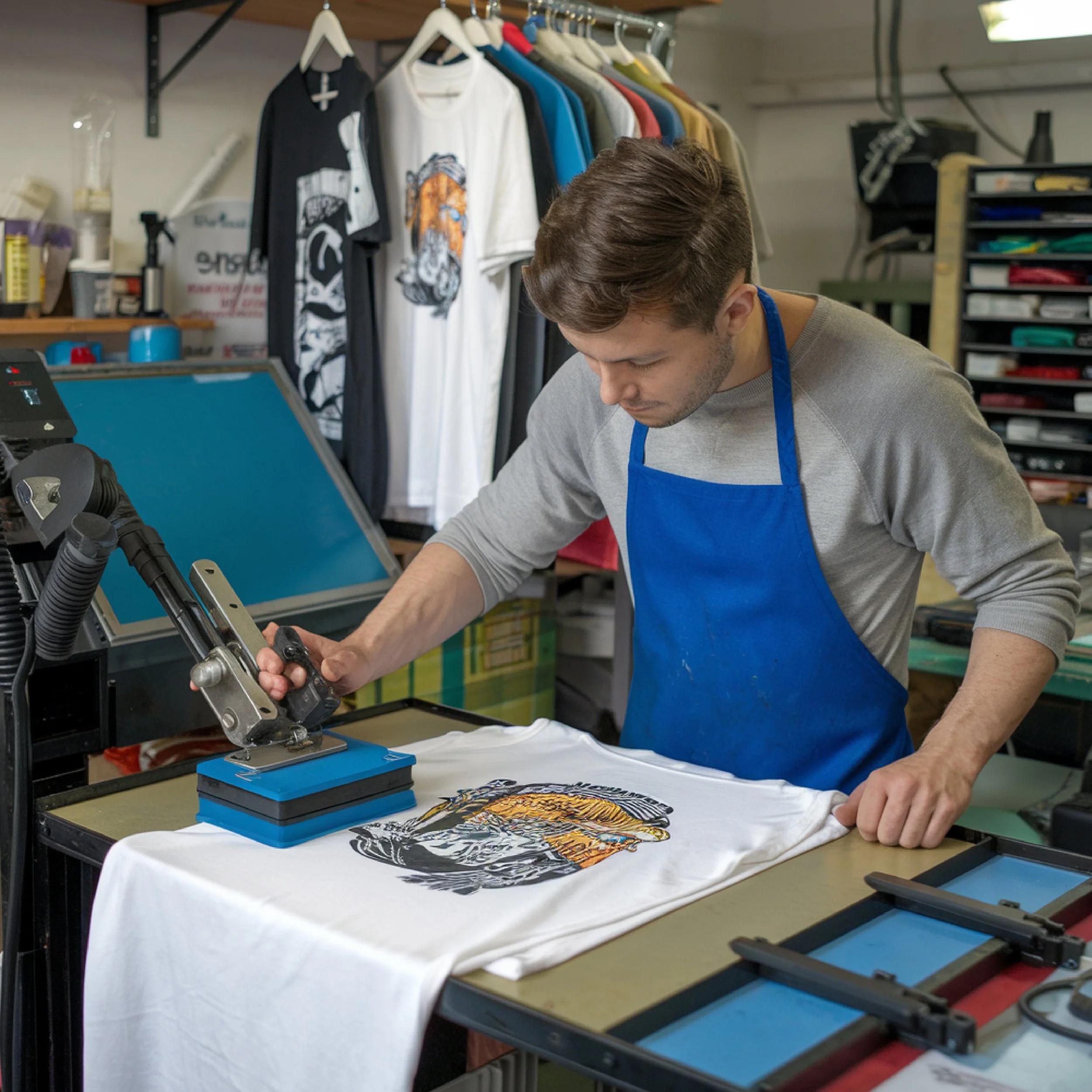
You need to choose the right fabric, find suitable blank garments, prepare your artwork, understand different printing methods and work out how much your project will cost. If you are ordering clothing for a business or event, you also need to consider sizing, delivery times and consistency across multiple garments.
The good news is that you do not need to own printing equipment or have professional fashion design experience to get started. With the right planning and a reliable clothing supplier, you can create personalised T-shirts, hoodies and other garments for almost any purpose.
This guide explains how to create custom T-shirts, how to choose the best T-shirts for custom printing, which fabrics work well with different designs and how small businesses can produce affordable custom clothing. It also explores how to make custom hoodies and prepare your first clothing collection.

1. Why Create Custom T-Shirts Instead of Buying Ready-Made Clothing?
Before choosing products or printing methods, it is worth understanding why personalised clothing has become such a popular option for individuals and businesses.
Standard retail clothing offers convenience, but it does not always provide the identity, flexibility or branding opportunities that people need.
Custom T-shirts allow you to create garments around a specific purpose.

For individuals, personalised clothing can help express personal interests, display original artwork or create memorable gifts.
For businesses, custom garments can support brand recognition. Employees wearing consistent branded clothing can create a more professional appearance at shops, restaurants, exhibitions and promotional events.
For entrepreneurs, custom printing provides an accessible way to test clothing designs before investing in a larger fashion collection.
Here are some common applications:
-
Personalised gifts for friends and family.
-
Branded T-shirts for small businesses.
-
Merchandise for musicians, creators and online communities.
-
Sports team and club clothing.
-
Promotional clothing for exhibitions and marketing campaigns.
-
Matching shirts for birthdays, weddings and family celebrations.
-
Clothing collections for independent fashion brands.
One important advantage is flexibility. You can begin with a single printed garment, test different designs and gradually increase production as demand grows.
This makes custom clothing particularly interesting for people who want to start small rather than invest heavily in inventory.
2. How to Create Custom T-Shirts: A Step-by-Step Guide
If you have never ordered personalised clothing before, the process may seem complicated. In reality, most custom T-shirt projects can be divided into six manageable steps.

Step 1: Decide What Your Custom T-Shirt Is For
Start by identifying the purpose of your project.
Are you creating clothing for personal use, selling merchandise, promoting a business or organising an event?
Your answer will influence almost every other decision.
For example:
| Purpose | Recommended direction |
|---|---|
| Personal gifts | Personalised graphics or photographs |
| Business uniforms | Simple logos and consistent colours |
| Clothing brand | Distinctive designs and retail-quality garments |
| Events | Affordable, comfortable and recognisable shirts |
| Sports teams | Durable garments with clear branding |
| Online merchandise | Designs that appeal to a specific audience |
A common mistake is choosing a T-shirt before deciding how it will be used.
A lightweight shirt might be ideal for summer promotional events, while a heavier cotton garment may be more appropriate for a premium streetwear collection.
Step 2: Choose the Right T-Shirt Style
Once you understand your requirements, consider the garment itself.
There are several popular styles available.
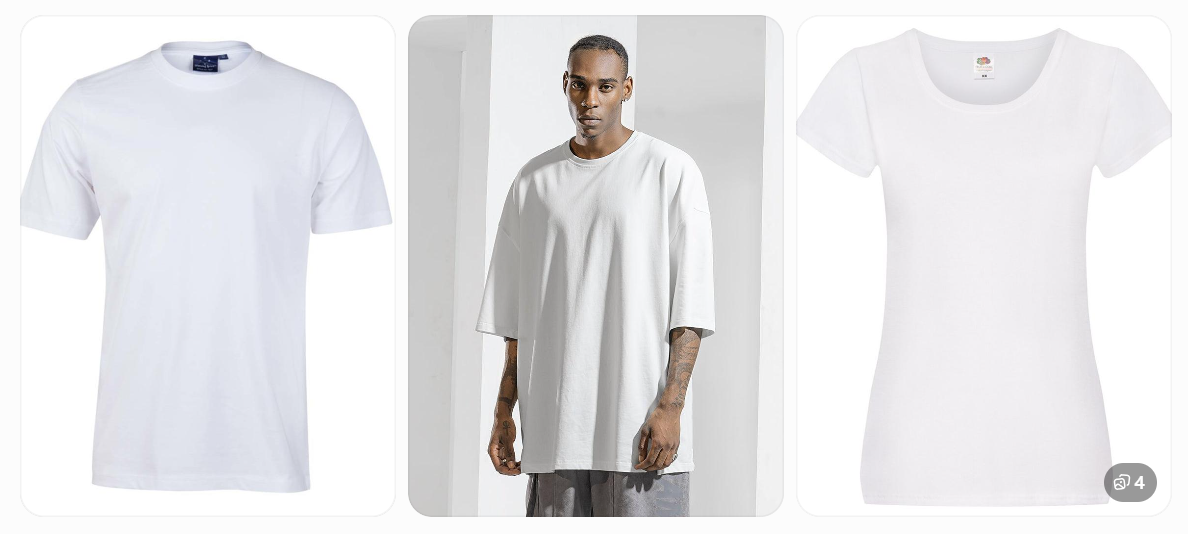
- Classic crew-neck T-shirts
These are versatile garments suitable for promotional clothing, everyday wear and general merchandise.
- Oversized T-shirts
Oversized styles are popular in contemporary streetwear and independent fashion collections. They provide additional space for larger graphic designs.
- Fitted T-shirts
Fitted garments can work well for fashion collections and customers who prefer a more tailored silhouette.
- Long-sleeve T-shirts
These offer additional coverage and create opportunities for sleeve graphics, chest logos and more distinctive designs.
- Heavyweight T-shirts
These generally have a thicker fabric construction and can create a more substantial, premium feel.
When choosing the best T-shirts for custom printing, consider the garment’s fabric composition, weight, surface texture, fit and available sizes.
Step 3: Select a Fabric That Matches Your Design
Fabric selection is one of the most important parts of creating successful custom clothing.
A beautiful design cannot compensate for a garment that feels uncomfortable or does not suit its intended use.
Cotton is one of the most common choices because of its comfortable feel and suitability for many printing applications.
However, not all cotton garments are identical.
Some are lightweight and breathable, while others are heavier and more structured. Organic cotton options may also appeal to customers who prioritise the sourcing and production of their clothing.
We will explore fabric choices in more detail later in this guide.
Step 4: Create Your Artwork
Your artwork is what makes the garment unique.
You do not necessarily need professional graphic design software. Simple designs can be created using accessible design applications, while more complex illustrations may require professional assistance.
Consider these design elements:
-
Logo placement.
-
Typography and font selection.
-
Main graphic dimensions.
-
Colour combinations.
-
Front, back and sleeve printing.
-
Transparency and background removal.
For professional printing, avoid using small, blurry images downloaded from the internet.
A high-resolution image is essential if you want your finished garment to look sharp.
For DTG printing, The T-Shirt Bakery recommends artwork at 300 DPI at the actual print size, preferably supplied as a high-resolution PNG with a transparent background.
Step 5: Choose a Printing Method
There are several ways to transfer a design onto clothing.
The best option depends on your artwork, garment material, order quantity and desired finish.
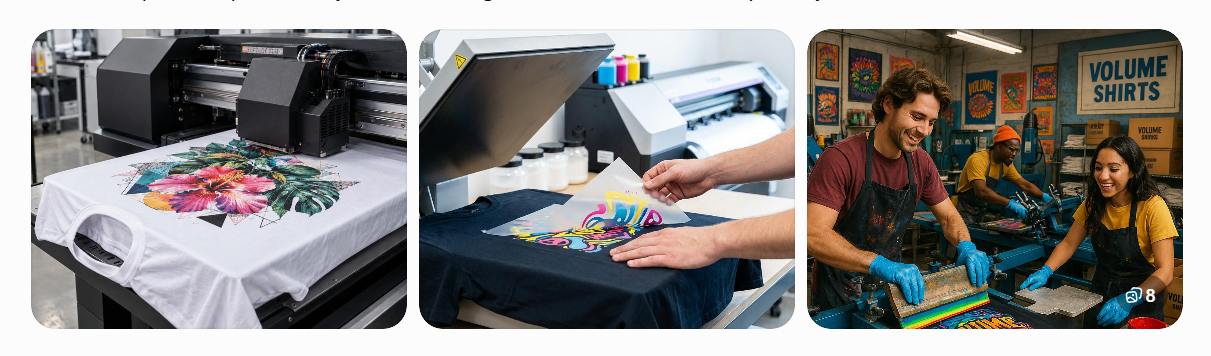
– Direct-to-Garment (DTG)
DTG printing applies water-based ink directly onto the fabric.
It is particularly useful for detailed illustrations, photographs, gradients and multi-colour artwork.
Advantages include:
-
Detailed full-colour designs.
-
No traditional screen setup.
-
Suitable for individual orders.
-
Soft print feel on suitable garments.
-
Convenient for testing different designs.
DTG is especially worth considering when you want to produce a small number of personalised cotton T-shirts.
– Direct-to-Film (DTF)
DTF printing involves printing artwork onto a special film before transferring it to a garment using heat.
It offers flexibility across different fabric types and can be useful for designs that are not ideally suited to direct-to-garment printing.
– Screen Printing
Screen printing uses separate screens to apply ink to the garment.
It can be an economical choice for larger production runs, particularly when designs use a limited number of colours.
However, the initial setup makes it less attractive for very small quantities or frequently changing designs.
– Embroidery
Embroidery uses thread to create a design directly on clothing.
It is particularly suitable for:
-
Business logos.
-
Polo shirts.
-
Staff uniforms.
-
Premium hoodies.
-
Hats and accessories.
Unlike printed graphics, embroidery creates a raised, textured finish.
There is no universally perfect printing method. Compare the artwork requirements, garment type, quantity and total cost before deciding.
Step 6: Review Your Design and Place an Order
Before production begins, carefully review your design.
Check:
-
Spelling and grammar.
-
Logo proportions.
-
Image resolution.
-
Print placement.
-
Garment colour.
-
Size selection.
-
Front and back artwork.
If you are ordering multiple garments, make sure the size distribution matches your audience.
For a business or event, consider ordering a sample first if the budget and schedule allow.
This gives you an opportunity to assess the garment, fit and print appearance before committing to a larger quantity.
3. Best T-Shirts for Custom Printing: What Should You Choose?
Choosing the right blank T-shirt is just as important as choosing the printing method.
A suitable garment should provide a comfortable fit, a consistent surface and the appearance you want for your finished product.
Here are several popular product options worth considering.

AWDis Lightweight Unisex 150 T-Shirt
The AWDis Lightweight Unisex 150 T-Shirt is an interesting option for promotional clothing, events and everyday custom printing.
The AT001 model has a lightweight 150 gsm construction and is designed with garment decoration in mind.
Its smooth surface makes it a practical choice for DTG printing projects, while its relatively lightweight construction can suit warmer weather.
Best suited for:
-
Promotional T-shirts.
-
School and club events.
-
Casual branded clothing.
-
First-time custom clothing projects.
This is a practical starting point if you want a straightforward blank T-shirt without moving into heavyweight or premium fashion styles.
Stanley/Stella Creator 2.0 T-Shirt

For customers interested in a more premium clothing option, the Stanley/Stella Creator 2.0 is worth exploring.
This unisex garment is part of Stanley/Stella’s organic cotton collection and can suit independent fashion brands looking for a more considered product range.
Best suited for:
-
Independent clothing labels.
-
Premium merchandise.
-
Organic cotton collections.
-
Minimalist graphic designs.
Its positioning makes it an option for brands that want to differentiate their products through garment choice rather than relying entirely on the printed design.
Gildan Hammer Heavyweight T-Shirt

If you prefer a heavier garment, the Gildan Hammer Heavyweight T-Shirt is another option.
Heavyweight T-shirts are often chosen for their more substantial feel and structured appearance.
They can work particularly well for streetwear-inspired collections and designs where the garment itself is part of the product’s appeal.
Best suited for:
-
Streetwear collections.
-
Oversized-inspired styling.
-
Premium graphic merchandise.
-
Customers who prefer thicker fabrics.
Before ordering, check the exact garment weight, cut and sizing information.
AWDis Midweight Unisex 180 T-Shirt

The AWDis AT002 provides a middle ground between lightweight promotional garments and heavier fashion-oriented T-shirts.
Its 180 gsm construction may appeal to buyers who want a more substantial garment without choosing a particularly heavy option.
Best suited for:
-
Everyday branded clothing.
-
Small business merchandise.
-
Custom graphic T-shirts.
-
General-purpose printing projects.
You can explore these garment options through The T-Shirt Bakery’s AWDis collection.
These are examples of products available through the supplier, not a claim that every model is suitable for every design. Always check current stock, specifications and printing compatibility.
4. Best Fabric for Printed T-Shirts: Cotton, Polyester or Blends?
Fabric choice affects comfort, appearance, print performance and the overall experience of wearing a custom garment.

100% Cotton
Cotton is a popular choice for everyday T-shirts.
It offers a natural feel and is widely used for casual clothing and printed merchandise.
Advantages:
-
Comfortable for everyday wear.
-
Breathable.
-
Suitable for many DTG applications.
-
Available in a wide range of garment weights.
Potential disadvantages include shrinkage if garments are not properly cared for and differences in surface texture between manufacturers.
Organic Cotton
Organic cotton is an option for businesses that want to explore clothing made with organically grown cotton.
It can be particularly relevant to brands that want to communicate a sustainability-focused product selection.
However, avoid assuming that an organic label automatically means an entire garment has a lower environmental impact. Consider certifications, manufacturing processes and the supplier’s supporting information.
Polyester
Polyester is frequently used in sportswear and performance clothing.
Its moisture-management characteristics can make it suitable for activewear, uniforms and certain promotional applications.
However, traditional DTG printing is generally more straightforward on cotton and cotton-rich garments than on polyester.
For polyester products, the printing supplier should confirm which decoration method is suitable.
Cotton-Polyester Blends
Blended fabrics combine different fibre characteristics.
They can provide a balance between comfort, durability, weight and performance, depending on the fabric construction.
They are commonly used in sweatshirts, hoodies and casual garments.
Which Fabric Should You Choose?
| Your priority | Fabric to consider |
|---|---|
| Everyday casual clothing | 100% cotton |
| Lightweight promotional shirts | Lightweight cotton |
| Premium clothing collections | Higher-quality cotton or organic cotton |
| Sportswear | Polyester or performance blends |
| Sweatshirts and hoodies | Cotton-polyester blends |
| Sustainability-focused collections | Certified organic options |
The most important rule is to match the material to the printing process and intended use.
A supplier experienced in custom garment printing can help identify compatible products before you place an order.
5. How to Make Custom Hoodies for Your Clothing Collection
Custom hoodies are another excellent option for businesses, independent designers and merchandise creators.
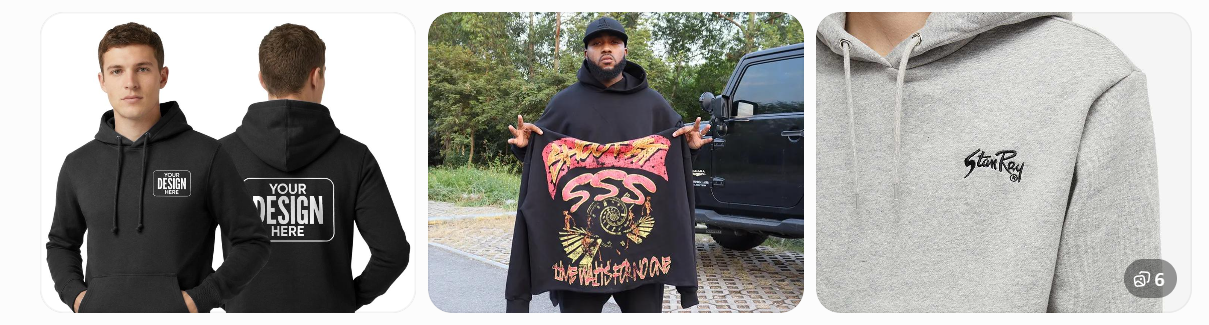
Unlike T-shirts, hoodies offer additional design opportunities through the front pocket, sleeves, chest and back.
Choose the Right Hoodie Style
Consider the following options:
Pullover hoodies: A classic style suitable for casual clothing, team merchandise and streetwear.
Zip-up hoodies: Useful for layering and practical branded clothing.
Heavyweight hoodies: Suitable for customers who prefer a thicker and more substantial garment.
Organic cotton hoodies: An option for brands developing a more sustainability-focused collection.
Select the Printing or Decoration Method
DTG can be suitable for detailed artwork on compatible hoodie fabrics.
DTF offers another option when the fabric or design requires a transfer-based process.
Embroidery is particularly attractive for simple logos and professional branding.
For example, a small embroidered chest logo can create a clean appearance for a business hoodie, while a large printed back design may work better for streetwear merchandise.
Consider the AWDis JustHoods College Hoodie

The AWDis JustHoods College Hoodie (JH001) is one of the notable hoodie options featured in The T-Shirt Bakery’s staff picks and popular products.
It offers an accessible starting point for customers exploring custom hoodie printing.
Potential applications include:
-
Branded business hoodies.
-
College and university merchandise.
-
Club and team clothing.
-
Personalised gifts.
-
Independent fashion collections.
The supplier also offers coordinating products, including the JH030 sweatshirt, which can help create a more consistent collection.
You can explore custom hoodie options here.
6. How to Start a Clothing Brand Without Investing Too Much Money
Starting a clothing brand can sound expensive, particularly if you imagine renting production space, purchasing printing machinery and holding large amounts of stock.
However, you can approach the process differently.

The key is to validate your designs and target audience before making substantial investments.
Start With a Specific Audience
Rather than creating clothing for everyone, choose a clear customer group.
Examples include:
-
Minimalist fashion enthusiasts.
-
Fitness communities.
-
Pet lovers.
-
Music fans.
-
University students.
-
Local businesses.
-
Outdoor lifestyle enthusiasts.
A specific audience makes it easier to develop relevant designs and communicate the value of your products.
Develop a Small Initial Collection
You do not need 30 designs when launching your first collection.
Start with a few products that work together.
For example:
| Product | Purpose |
|---|---|
| Classic T-shirt | Main everyday product |
| Graphic T-shirt | Signature design |
| Hoodie | Higher-value product |
| Sweatshirt | Alternative seasonal garment |
Using consistent colours, fonts and design themes helps establish a recognisable identity.
Avoid Buying Too Much Inventory
One of the biggest challenges for new clothing businesses is unsold stock.
Buying hundreds of garments before understanding customer demand can tie up money that could be used for marketing and product development.
Instead, consider small production runs or made-to-order arrangements.
This approach allows you to test different designs and learn which products customers actually want.
Calculate Your Costs Carefully
A profitable clothing brand needs more than attractive designs.
You should account for:
-
Blank garment costs.
-
Printing or embroidery.
-
Packaging.
-
Shipping.
-
Payment processing.
-
Website expenses.
-
Advertising.
-
Returns and customer support.
For example, if a finished T-shirt costs £12 to produce and package, selling it for £15 may leave very little room for marketing and other expenses.
Calculate your actual margins before setting retail prices.
Choose a Supplier That Can Grow With You
A supplier suitable for your first five garments may not necessarily be suitable for an order of 500.
Look for flexible quantities, clear pricing, reliable communication and a suitable selection of garments.
For example, The T-Shirt Bakery offers online orders for 1–49 pieces and a separate quotation process for orders of 50 or more. Its bulk service also provides dedicated account management.
This type of arrangement can be useful when a small project develops into a larger clothing business.
7. Affordable Custom Clothing for Small Businesses
Small businesses often need branded clothing but cannot justify expensive uniform programmes.
The challenge is finding garments that look professional without making the initial order unnecessarily expensive.
Start With Essential Garments
You may not need to customise every clothing item your employees wear.
A simple collection could include:
-
Branded T-shirts.
-
A few hoodies for colder weather.
-
Embroidered polo shirts for customer-facing roles.
-
Additional garments for promotional events.
Choosing versatile garments can help keep the range manageable.
Use Simple Branding
A small chest logo can often create a professional appearance without requiring complicated artwork.
Consider using the same logo, colours and placement across different garment types.
This helps create a consistent visual identity.
Compare Printing and Embroidery
For large, colourful designs, DTG or DTF may be appropriate.
For smaller business logos, embroidery can provide a textured finish.
The best solution depends on the garment and the intended appearance.
Consider Bulk Pricing
If your business needs multiple garments, request a quotation rather than assuming that the displayed individual price represents the best available rate.
The T-Shirt Bakery advertises volume savings and a separate bulk ordering service for larger orders. Its website states that orders of 50 or more can be handled through a quotation process.
For businesses comparing suppliers, this can be worth investigating.
You can also review its business clothing options.
8. How to Make Custom Shirts for Events
Custom event shirts are a practical way to bring people together and make an occasion more memorable.
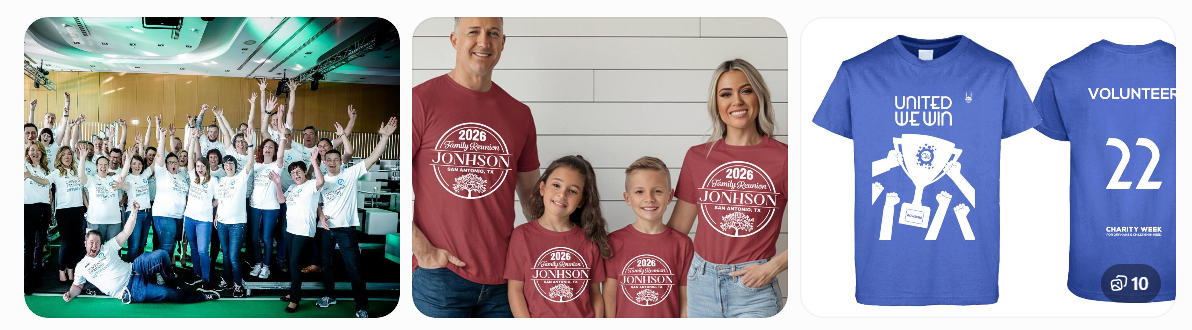
Whether you are organising a corporate exhibition, charity fundraiser, wedding, birthday celebration or sports competition, the right design can help create a shared identity.
Choose a Design That Is Easy to Recognise
Event clothing should communicate its message clearly.
Avoid using too many fonts, complicated graphics or excessive text.
A simple design with the event name, date and logo is often sufficient.
Select Comfortable Garments
People may wear event shirts for several hours.
Lightweight cotton garments can be a suitable choice for outdoor summer events, while sweatshirts and hoodies may be more appropriate for colder conditions.
Plan Sizes in Advance
Ask attendees or participants for their preferred sizes before placing the order.
Remember that sizing can vary between manufacturers.
Always review the supplier’s size chart rather than relying on assumptions.
Allow Enough Production Time
Do not wait until the last few days before an event.
You need time for:
-
Finalising the artwork.
-
Selecting garments.
-
Confirming sizes.
-
Reviewing the order.
-
Production.
-
Shipping and delivery.
The T-Shirt Bakery states that its normal DTG production turnaround is generally 5–10 working days, although actual timing can depend on the order and production schedule.
If your event has a fixed date, contact the supplier before ordering and confirm that the required delivery deadline can be met.
9. How to Choose a Custom Clothing Printing Supplier
Finding a supplier is one of the most important decisions in the entire process.
A low advertised price does not necessarily mean the best overall value.

Here are several factors worth comparing.
Product selection: Does the supplier offer different garment styles, sizes, colours and materials?
Printing technology: Can it handle your artwork and preferred decoration method?
Order flexibility: Can you order one garment or only large quantities?
Pricing transparency: Are setup charges, printing costs and delivery fees clearly explained?
Production time: Can the supplier meet your deadline?
Artwork support: Does it provide guidance on image resolution, file formats and design placement?
Customer support: Can you contact someone if you have questions about an order?
A Supplier Worth Considering: The T-Shirt Bakery
If you are looking for custom clothing options in the UK, The T-Shirt Bakery is one supplier worth comparing.

Its website offers a selection of T-shirts, hoodies, sweatshirts and vests, including garments from brands such as AWDis, Gildan and Stanley/Stella.
The service covers several decoration methods, including DTG printing, DTF transfers and embroidery.
Some features that may be relevant include:
-
Individual online orders.
-
Bulk order quotations.
-
A selection of organic clothing.
-
Different garment weights and styles.
-
UK-based production and nationwide delivery.
-
Artwork guidance for printing projects.
For customers starting with a small order, the ability to explore individual garments is useful. Businesses planning larger projects can investigate the supplier’s quotation process and account support.
It is not automatically the right choice for every project. Compare the final price, garment specifications, delivery terms and artwork requirements before deciding.
Explore the available custom clothing and printing options:
Visit The T-Shirt Bakery – Custom T-Shirts, Hoodies and Printing
This link supports the supplier’s product and service range and allows you to explore the available options for your project.
10. Buyer Guide: What to Check Before Ordering Custom Clothing
Before spending money on custom T-shirts or hoodies, use this practical checklist.

| Buying factor | What to check |
|---|---|
| Fabric | Cotton, organic cotton or blends |
| Weight | Lightweight, midweight or heavyweight |
| Fit | Regular, relaxed, oversized or fitted |
| Sizes | Available size range and measurements |
| Printing | DTG, DTF, screen printing or embroidery |
| Artwork | Resolution, transparency and dimensions |
| Quantity | Minimum order and bulk discounts |
| Colour | Garment and print colour compatibility |
| Delivery | Production time and shipping options |
| Returns | Custom-product return and fault policies |
Recommended Buying Decisions by Customer Type
For beginners
Start with a simple cotton T-shirt and a straightforward design. Avoid spending too much on your first order.
For small businesses
Choose consistent garments that match your brand colours. Consider a combination of printed T-shirts and embroidered uniforms.
For independent clothing brands
Explore different garment weights, premium blanks and organic options. Your product quality should support your brand positioning.
For event organisers
Prioritise comfort, sizing, production capacity and delivery deadlines.
For hoodie buyers
Consider fabric weight, fit, print placement and whether embroidery or printing better suits your design.
A Simple Cost Calculation
Before ordering, calculate your expected total cost.
For example, imagine a business needs 50 custom T-shirts.
| Cost item | Example |
|---|---|
| Blank garment | £4.00 |
| Printing | £3.00 |
| Packaging | £0.50 |
| Delivery allocation | £0.50 |
| Estimated cost per shirt | £8.00 |
| Estimated total for 50 | £400 |
Illustrative calculation only, not a quotation or actual supplier price.
You should also allow for taxes, artwork preparation, potential setup costs and other expenses where applicable.
A good purchasing decision is based on the final delivered cost, not just the advertised blank garment price.
11. Common Mistakes to Avoid When Creating Custom T-Shirts
Even a relatively simple printing project can encounter problems if important details are overlooked.
Using low-resolution images
A small image may look fine on a phone but appear pixelated when enlarged.
Always prepare artwork at an appropriate resolution.
Choosing the cheapest fabric without checking quality
The cheapest blank garment may not provide the fit, feel or durability your customers expect.
Compare garment specifications before ordering.
Ignoring the printing method
Not every printing technique works equally well on every material.
Confirm compatibility with your supplier.
Ordering too many products too early
Large orders can create unnecessary financial risk if you have not tested customer demand.
Start with manageable quantities.
Ignoring size charts
Different garment manufacturers may use different measurements.
Check the size chart and consider a sample when appropriate.
Leaving orders until the last minute
Custom garments require preparation and production time.
Always plan around your actual delivery deadline.
Failing to review custom-order policies
Custom products may have different return conditions from standard retail clothing.
Understand the supplier’s policies before completing payment.
12. Final Thoughts: Making Your First Custom Clothing Project a Success
Creating custom T-shirts and hoodies does not need to be an overwhelming process.
The most important thing is to start with a clear purpose, select appropriate garments, prepare good artwork and choose a printing method that matches your requirements.
If you are creating a few personalised shirts, a simple cotton garment and DTG printing may be enough.
If you are building a clothing brand, you may want to explore heavyweight T-shirts, organic cotton options and a wider selection of hoodies and sweatshirts.
For businesses and event organisers, flexibility, consistent quality and reliable delivery should be major considerations.
The T-Shirt Bakery is one option worth exploring if you need custom garments in the UK, particularly if you want to compare different blank clothing products, printing methods and order quantities.
You can browse its available products and services here:
Explore Custom T-Shirts, Hoodies and Clothing at The T-Shirt Bakery
Take your time comparing the available options, check the garment specifications and choose products that fit your project and budget.
A successful custom clothing project starts with good planning, not simply choosing a design and pressing the order button.
13. Frequently Asked Questions (FAQ)

1. How do I create custom T-shirts?
Start by choosing a garment, preparing your artwork and selecting a printing method. Upload your design to a custom clothing supplier, check the print placement and garment specifications, select your sizes and quantities, then confirm your order.
2. What are the best T-shirts for custom printing?
The best choice depends on your project. Lightweight cotton T-shirts are suitable for promotional events, midweight garments are versatile for everyday use, and heavyweight T-shirts can work well for premium streetwear collections. AWDis, Gildan and Stanley/Stella offer several options worth comparing.
3. What is the best fabric for printed T-shirts?
Cotton is a popular choice for custom T-shirts because of its comfort and suitability for DTG printing. Organic cotton is another option for brands interested in organically grown materials. Polyester and blended fabrics may be more appropriate for certain sportswear and performance applications.
4. How do I make custom hoodies?
Choose a hoodie style, select a suitable fabric and prepare your design. Then decide whether you want DTG printing, DTF transfers or embroidery. Check the available print areas, garment measurements and production time before placing your order.
5. Is custom clothing expensive for small businesses?
Not necessarily. Costs depend on garment quality, printing method, order quantity and delivery. Small businesses can start with a limited selection of essential garments and request bulk quotations when ordering larger quantities.
6. Can I order just one custom T-shirt?
Yes. Some printing services accept individual orders without a minimum quantity. The T-Shirt Bakery advertises online ordering for 1–49 pieces, making it possible to explore smaller projects before committing to larger production runs.
7. Is DTG or DTF better for custom T-shirts?
DTG is particularly useful for detailed, full-colour designs printed directly onto suitable garments, especially cotton. DTF uses a transfer film and can provide more flexibility across different fabric types. The better choice depends on your design, garment and intended finish.
8. How many T-shirts should I order for an event?
The correct quantity depends on the number of participants, staff and additional attendees. Prepare a size list before ordering and consider a small allowance for unexpected requirements. Avoid ordering excessive quantities without a clear need.
9. Can I use custom T-shirts to start a clothing brand?
Yes. Custom printing provides an accessible way to test designs and develop an initial collection. You can start with a few T-shirts, introduce hoodies later and expand once you understand your customers’ preferences.
10. How long does custom T-shirt printing take?
Production times vary by supplier, printing method and order quantity. The T-Shirt Bakery states that its normal DTG turnaround is generally 5–10 working days. Always confirm the production and delivery schedule for your particular order.
11. What artwork format should I use for custom T-shirt printing?
A high-resolution PNG with a transparent background is a practical option for many DTG projects. The T-Shirt Bakery recommends 300 DPI at actual print size and RGB colour mode for its artwork submissions. Vector SVG artwork can also be useful for scalable designs.
12. Where can I buy custom T-shirts and hoodies in the UK?
You can compare local printing businesses and online suppliers offering different garments and decoration services. The T-Shirt Bakery is one UK-based option offering custom T-shirts, hoodies, sweatshirts, DTG, DTF and embroidery.
Explore The T-Shirt Bakery’s clothing range.